

5 Darkest Episodes Of Batman: The Animated Series
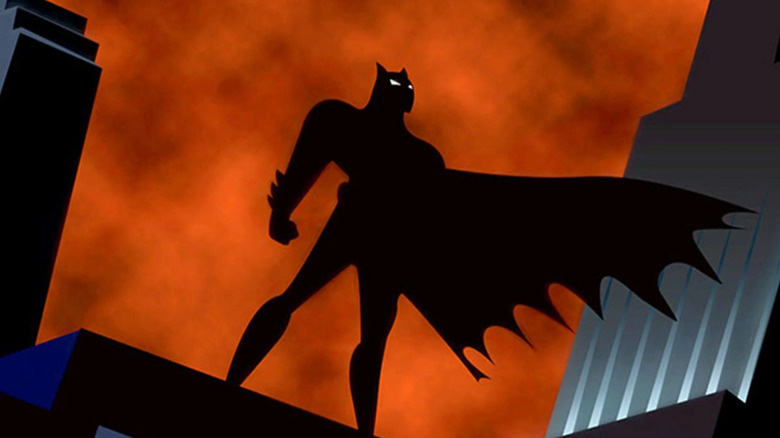
When "Batman: The Animated Series" debuted in 1992, it changed what a children's animated series could be, bringing new depth and maturity to the medium.
It's not surprising that the classic DC animated series remains popular with so many adult fans who were introduced to the show as kids. Inspired in part by Tim Burton's darker big-screen take on the Dark Knight, Bruce Timm and Eric Radomski's animated take on Batman was styled after 1930s and '40s film noir, exploring the darker tone and psychological themes that helped make the Burton movies such a success.
Compared to other animated series airing around the same time, like "X-Men" or "Spider-Man," "Batman: The Animated Series" was decidedly more mature. This came down in part to a positive working relationship behind the scenes with Fox's Head of Broadcast Standards and Practices, Avery Coburn. Coburn embraced the series' darker vision, helping the creative team find ways to make their ideas work within the boundaries of what was allowed on children's TV at the time, without compromising that maturity. This included finding a way to make a scene where Bruce Wayne committed suicide in a dream sequence during the episode "Perchance to Dream" abstract enough that it wouldn't traumatize any young viewers.
In particular, the early seasons of "Batman: The Animated Series" featured a distinctively dark art style inspired by art deco designs, as well as episodes that dealt with psychological themes and unsettling stories from the cruelest corners of Gotham.
The Forgotten
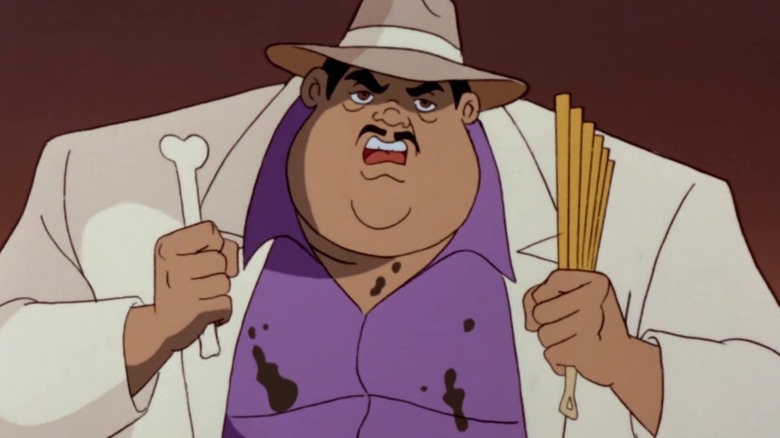
"The Forgotten" found the perfect way to make a Batman story immediately more terrifying to young viewers — take away Batman. This dark little tale about Gotham's homeless population being abducted and exploited for slave labor saw Bruce Wayne losing his memory. Adopting a disguise to investigate why homeless people keep disappearing in Gotham, Bruce gets attacked by two of the abductors he was looking for. A blow to the head leaves Bruce with no recollection of either of his real identities and viewers without the reassurance of the Dark Knight's presence.
This is a dark episode in subject matter alone. Bruce gets taken into captivity in a slave camp in the desert, forced to work in a chain gang for a slaver named Biggis. If they ever step out of line, the men in the camp are punished by being locked in a metal box and left to bake beneath the desert sun. After a series of nightmarish visions where Batman became the Joker, was surrounded by more homeless beggars than he could ever help, and relived the death of his parents, Bruce finally regains his memory and Batman brings Biggis to justice.
The episode's depiction of slavery, the torture endured by Bruce and other captives in the metal box and the unsettling visions Bruce experiences as his memories struggled to reawaken all made this a distinctly unsettling episode of "Batman: The Animated Series."
Dreams in Darkness
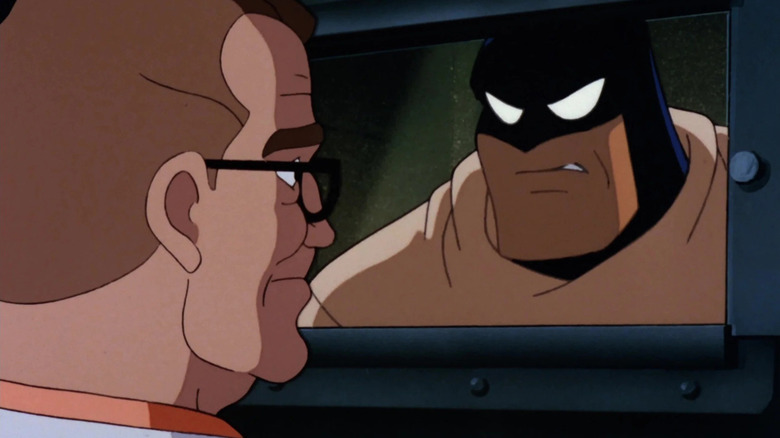
Having Bruce forget he was Batman may have unnerved some young viewers, but perhaps even worse was seeing the Dark Knight locked up in Arkham Asylum. "Dreams in Darkness" saw Batman trying to foil the Scarecrow's plan to contaminate Gotham's water supply with fear toxin. Unfortunately, in the process, Batman inhaled the mind-altering gas himself and started hallucinating. When a vision of Robin standing in the middle of the road makes him crash the Batmobile, he is taken to Arkham Asylum, where it is assumed he has lost his mind.
Seeing Batman pleading for Commissioner Gordon's help while locked up in the same institution as his worst enemies — his desperate pleas falling on the deaf ears of a doctor who had already written off Batman as delusional — is a deeply upsetting visual for any child. The Dark Knight's struggles with the effects of the fear toxin only added to the vulnerability permeating throughout the episode, as the usually fearless hero is plagued by nightmarish villains. A particularly disturbing moment featured Batman hallucinating an encounter with his parents, watching them walk away and vanish into a tunnel as he begged them not to go. The entire tunnel then rose from the ground, transforming into a giant apparition of the very gun that had taken their lives.
The nightmarish vision of the gun at the center of Batman's trauma was a shocking image, with such a focus on firearms usually being forbidden in 1990s children's television.
The Underdwellers
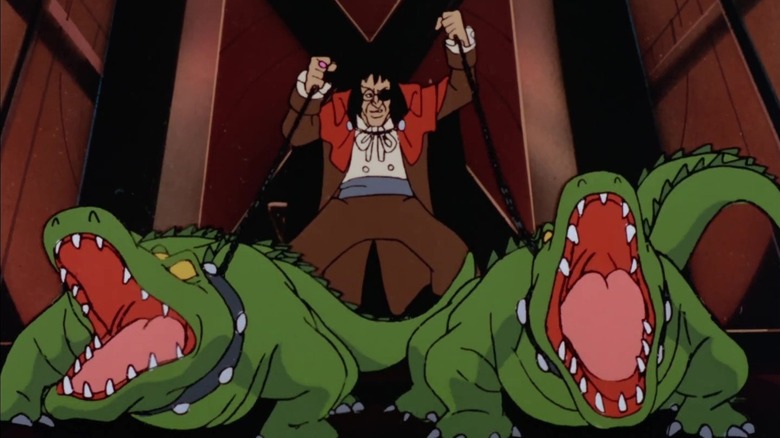
It's hard to say whether this episode is scarier for children or older fans with kids of their own. In terms of premise alone, "The Underdwellers" was perhaps the darkest territory "Batman: The Animated Series" ever explored. It introduced the Sewer King, a harrowing villain who had been abducting children, controlling and exploiting them by forcing them to serve him as his own personal band of thieves and slaves. Trapped in the Sewer King's underground lair, the children live in perpetual silence, terrified of speaking and enraging the villain. So accustomed are the children to a life spent in constant darkness that, when they are rescued by Batman, they're nearly blinded by the sun. If they ever angered the Sewer King, he also used bright light as a means of punishment.
The Sewer King himself was equal parts Fagin and Captain Hook, dressed in pirate-like attire while commanding a group of crocodiles to terrorize his abducted children into fearful subservience. The sheer weight of his inhumanity was powerfully underscored by the dark rage Batman exhibited when confronted by the Sewer King's crimes. In one of his most aggressive moments on the animated series, Bruce considers breaking his own rules, forgoing the police and the courts to kill the Sewer King. Before he can go through with it, however, the Sewer King is seemingly eaten by his own crocodiles, prompting Batman to simply remark "a gruesome fate for a gruesome man."
Two-Face: Part I
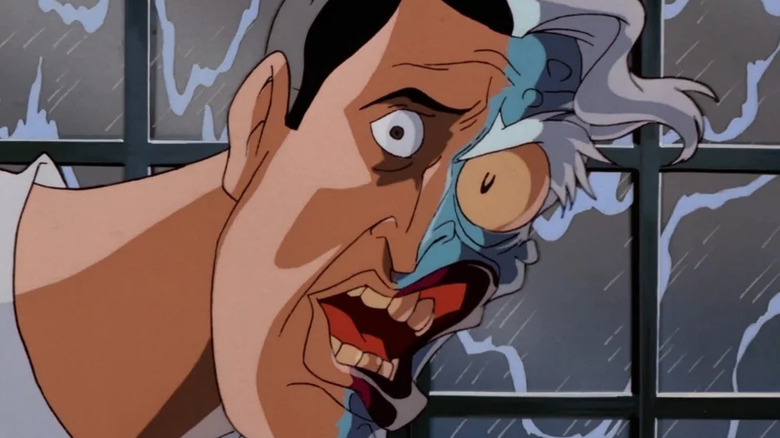
One of the most beloved episodes of "Batman: The Animated Series," "Two-Face: Part I" charted the transformation of Gotham City District Attorney Harvey Dent into the villainous Two-Face. The fittingly two-part "Two-Face" storyline serves as one of the greatest villain origin stories in the "Batman" mythos, but it's the first of these two episodes that delved into truly dark, mature territory and may very well have marked a turning point for children's animation.
"Two-Face: Part I" had to contend with an interesting dilemma for "Batman: TAS," namely, the absence of any supervillains. The episode builds towards the shocking last-minute reveal of Harvey Dent's scarred face, but up until that point, its conflicts are subdued and chiefly political or internal. Crime boss Rupert Thorne spends the episode trying to bring Harvey Dent under his control and finds a means of blackmail when he uncovers Harvey's deepest secret. Harvey Dent is suffering from dissociative identity disorder, struggling to contain a violent second personality he calls Big Bad Harv.
While Harvey's physical transformation into Two-Face is the moment fans are waiting for — and is delivered in an absolutely terrifying scene, a flash of lightning revealing Harvey's altered appearance at the episode's end — it's Harvey's struggles with his own mind, his fears of losing his political career and his unpredictable personality switches, that drive the episode. Harvey's fragile condition also makes his final transformation all the more tragic.
It's Never Too Late
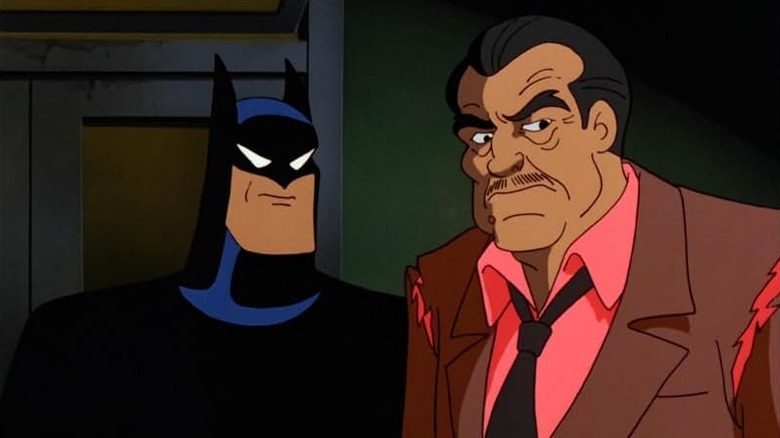
"It's Never Too Late" also featured no supervillains and was perhaps the most grounded episode of "Batman: The Animated Series." While other episodes featured deep dives into the Dark Knight's psyche or terrifying villains, "It's Never Too Late" was haunting in its uncompromising portrayal of the real-life horrors of drug crime. The topic was a shocking one to see even the notoriously dark "Batman: TAS" tackle, as drugs have always been such a taboo topic in children's animated shows. However, the episode focused solely on the destructive nature of addictive substances, delivering one of the most powerful anti-drug messages in any kids' show ever.
"It's Never Too Late" revolves around a conflict between two mob bosses, locked in a turf war for control of Gotham — Rupert Thorne, who would later tangle with Harvey Dent, and the older Arnold Stromwell, who has built his criminal empire selling drugs. Stromwell's son goes missing, for which he blames Thorne, but Batman shows Stromwell the truth. His son, Joseph, is in a rehab center, suffering after becoming hooked to the drugs that Stromwell has been selling.
This look at an all-too-real tragedy was coupled with Stromwell's haunting flashbacks to a childhood incident in which his brother lost his leg to a train while trying to save Stromwell's life. The episode ends with Stromwell's brother Michael, now a priest, confronting him. The gangster's guilt over his brother and son leads him to finally hand himself over to the police in what might be the darkest and most profound episode in the series.