

The Rings Of Power's Ancalagon The Black Explained: Who Killed Tolkien's Mightiest Dragon?
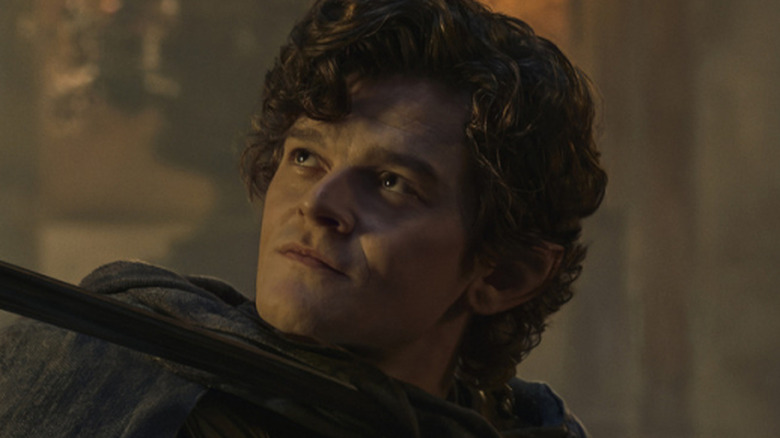
Contains spoilers for "The Lord of the Rings: The Rings of Power" Season 3, Episode 5 — "The Lady of Lórien"
As Middle-earth struggles in "The Rings of Power" Season 3, Episode 5, we finally learn a bit more about what happened to Galadriel's long-lost husband Celeborn. He's spent thousands of years in prison after being caught by the forces of evil in the final days of epic warfare that defined the First Age of J.R.R. Tolkien's world. At one point in the story, Galadriel says, "They told me you were dragon-fire." Celeborn responds that while dragon fire was a concern, he was knocked into some water by a horse right before "Ancalagon set my legion ablaze."
The name is a reference to Ancalagon the Black. The Index of Names at the end of "The Silmarillion" defines the character thusly: "Greatest of the winged dragons of Morgoth." Then we get the line: "Destroyed by Eärendil."
Translation: The greatest fire-breathing dragon to ever live in Middle-earth was killed by Elrond's father. The deadly encounter occurred in a world-changing, era-ending conflict called the War of Wrath, which was the final showdown between the angelic guardians of Arda (Tolkien's name for Earth), called the Valar, and the original Dark Lord Morgoth. There aren't a lot of details about the war. "The Silmarillion" says, "Of this march of the Host of the Valar to the north of Middle-earth little is said in any tale." One of the key features of that epic encounter, though, is the airborne duel between Eärendil and Ancalagon.
Ancalagon was a key part of the War of Wrath
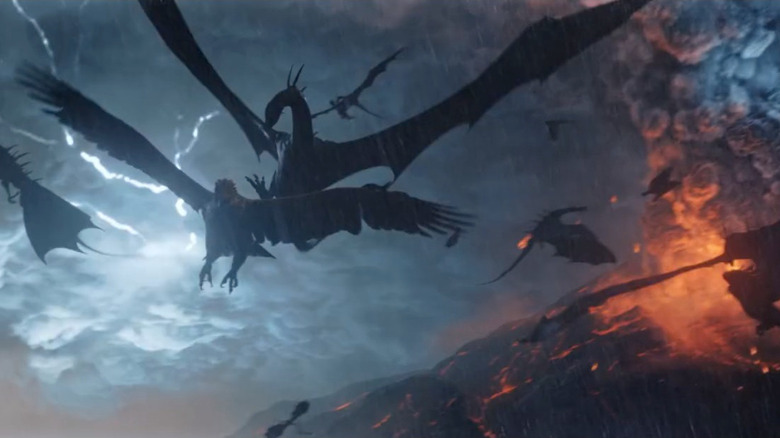
In the War of Wrath, also called the Great Battle, the Valar attacked Morgoth in his mighty fortress Angband, which was built into the volcanic mountains called Thangorodrim in the northern regions of Middle-earth. When Morgoth's hosts are mostly defeated, the Dark Lord unleashes a last desperate assault, including, for the first time, winged dragons. (Earth-bound dragons feature a lot before this, but the flying serpents are a novelty.) At first, the fiery surprise attack works. "The Silmarillion" says the host of the Valar is driven back, "for the coming of the dragons was with great thunder, and lightning, and a tempest of fire."
This is where we meet Ancalagon, yet his time on Tolkien's stage is brief; he's only really mentioned once in "The Silmarillion." Right after the winged dragons are introduced, Eärendil shows up on his flying ship with one of Tolkien's legendary jewels known as the Silmarils strapped to and shining from his brow. Eärendil arrives with a host of flying creatures, including the Great Eagles (one of which already showed up in "The Rings of Power" this season), at his back. The book says, "There was battle in the air all the day and through a dark night of doubt." Then we get the lone Ancalagon mention: "Before the rising of the sun Eärendil slew Ancalagon the Black, the mightiest of the dragon-host, and cast him from the sky; and he fell upon the towers of Thangorodrim, and they were broken in his ruin."
Ancalagon's fire was so hot it could melt Rings of Power (except for One)
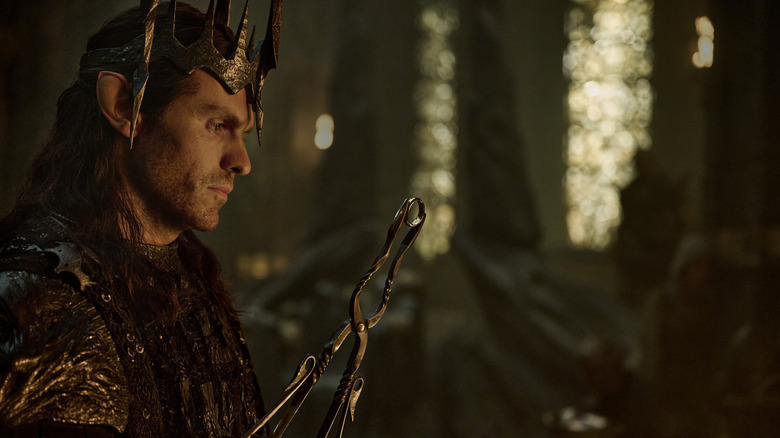
Ancalagon's moment in Middle-earth history may be brief, but his reputation as the greatest winged dragon endures for millennia. He's so infamous that he's still coming up in conversation ages later. Several thousand years after his death, Gandalf brings him up in conversation with Frodo at the beginning of the book "The Fellowship of the Ring." In it, the Wizard and Hobbit discuss options for destroying the One Ring that they've discovered Frodo possesses. Gandalf says, "It has been said that dragon-fire could melt and consume the Rings of Power, but there is not now any dragon left on earth in which the old fire is hot enough; nor was there ever any dragon, not even Ancalagon the Black, who could have harmed the One Ring, the Ruling Ring, for that was made by Sauron himself."
There are other dragons in Middle-earth history who are famously terrifying. Glaurung, the Father of Dragons, wreaks havoc and destroys kingdoms in "The Silmarillion." The smug Smaug is a primary antagonist in "The Hobbit" and, if he'd lived, would have been a major problem during "The Lord of the Rings." But Ancalagon is clearly in a class all his own. He is the ultimate manifestation of the "old fire" and the incredible power of his master, Morgoth. It's a shame we only get one mention of him in "The Silmarillion," and his time in the spotlight is over so quickly. Still, major kudos to Elrond's pop for making quick work of one of the biggest threats Middle-earth ever faced.
Episodes 5 and 6 of "The Rings of Power" Season 3 were released on November 18.