

15 Best TV Miniseries Ever Made, Ranked
More than any other television format, the miniseries comes closest to recreating the cinematic experience on the small screen. Whether adapted from a bestseller or based on real life events, a great miniseries tells a succinct story in a limited number of episodes without dragging things out over multiple seasons. The very best are defined by an elevated level of craft, as top-tier writers, directors, and actors use the format to tell stories that are too sprawling for cinemas.
Here are the 15 best TV miniseries ever made, ranked. In assembling this list, we left off anthology series like "Fargo," "American Horror Story," or "Beef," focusing instead on shows that told self-contained stories within a single season. We also left off titles like "The White Lotus," "Downton Abbey," and "Big Little Lies," each of which started as a miniseries before coming back for a second season (We bent the rules a little bit for some titles, but for good reason). The shows we've selected made a tremendous impact with just a limited number of episodes.
15. The Queen's Gambit (2020)
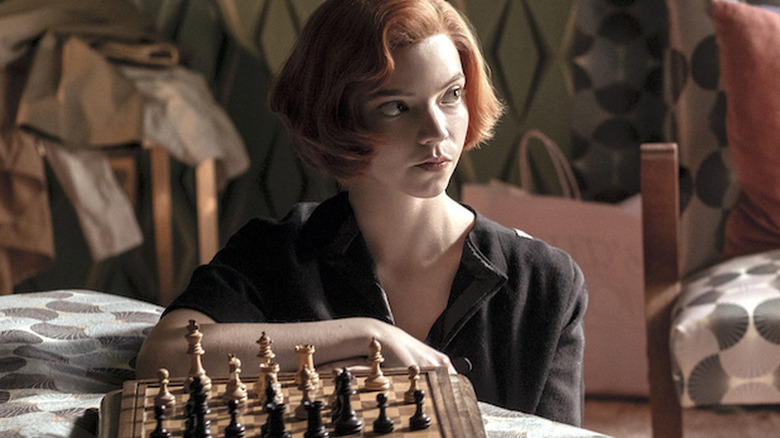
It took only four weeks for "The Queen's Gambit" to become the most watched miniseries in Netflix's history, which is really saying something for a seven episode show about chess. Adapted by writer-director Scott Frank from the novel by Walter Tevis, the series centers on Beth Harmon (Anya Taylor-Joy), an American orphan with a talent for chess. Throughout the 1950s and '60s, Beth rises through the ranks as a chess prodigy, winning tournaments while struggling with drug and alcohol addiction.
There are many things to praise about "The Queen's Gambit," from the meticulous recreation of the Cold War era to the nuanced writing and directing by Frank. Yet what makes the show truly special is Taylor-Joy's performance. As perfect a marriage of character and actor as one could hope for, Taylor-Joy is convincing both as an expert chess player and as a young woman deeply wounded by life. It's what makes the chess playing so compelling, as we realize each move is about more than just a victory. A critical success in addition to an audience favorite, "The Queen's Gambit" won 11 Emmys, including best limited series.
14. I, Claudius (1976)
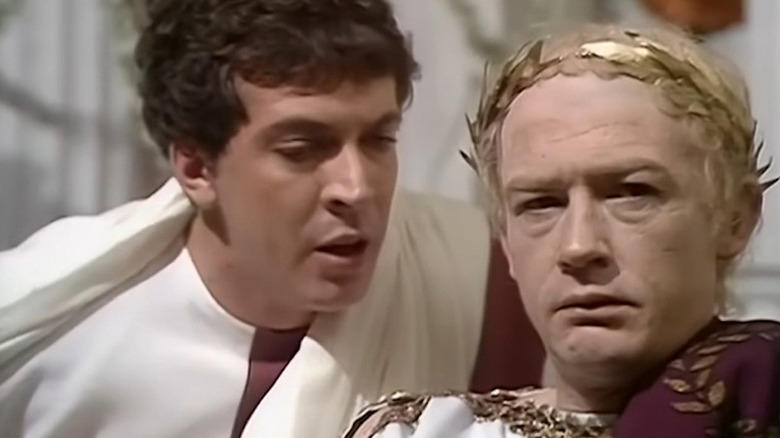
"I, Claudius" might lack the visual fidelity of a more modern miniseries, but it's just as dramatically compelling as anything made today. Produced by the BBC in 1976, it explores the early Roman Empire through the memories of the elderly emperor Claudius (Derek Jacobi), beginning in the year 24 BC and ending with his assassination 30 years later. Throughout that time, Claudius bears witness to the treachery, backstabbing, and double-crosses of the Roman Empire.
Shot on videotape on sound stages, "I, Claudius" makes no attempt to hide its artificiality, choosing instead to play it more theatrically. In many ways, the 13 episode series feels like a taped version of a live stage play, albeit one not performed in front of an audience. And for all that "I, Claudius" lacks in production value, it more than makes up for in writing and performances. The scripts by Jack Pulman — adapted from a pair of books by Robert Graves — are almost Shakespearean in their themes and dialogue, allowing a showcase for performers like John Hurt as the mad emperor Caligula and Patrick Stewart as the Roman solider Sejanus.
13. Brideshead Revisited (1981)
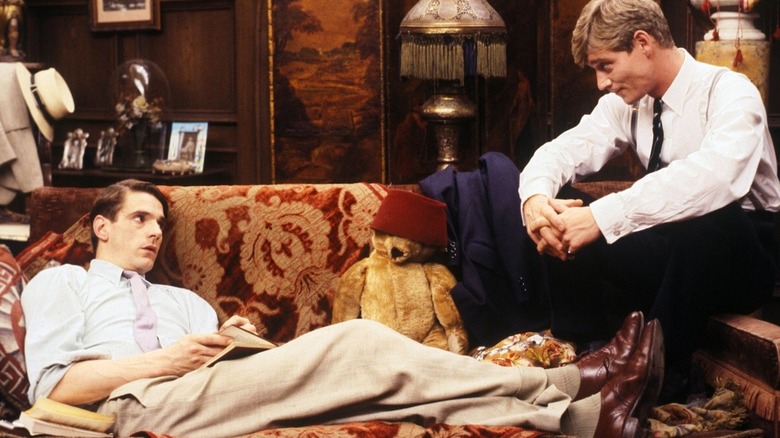
When the 2008 movie version of "Brideshead Revisited" hit theaters, it couldn't help but draw comparisons to the 1981 miniseries, and as far as most critics were concerned, it failed to live up to its predecessor. It was a sign of the staying power of that adaptation of Evelyn Waugh's 1945 novel, which has been declared one of the best television shows of all time by the likes of Time magazine and The Guardian. Taking place between the 1920s and 1940s, it centers on Charles Ryder (Jeremy Irons), who forges a friendship with Lord Sebastian Flyte (Anthony Andrews) and his wealthy family.
Whereas the movie had to condense Waugh's sprawling novel into a two-hour movie, the miniseries unfolds over 11 episodes, and makes good use of each installment to explore the many themes and motifs of the book. A rumination on Catholic guilt and nostalgia for British aristocracy, "Brideshead Revisited" is at times rueful and wistful, presenting an idealized world that isn't as glamorous as it at first appears. It's also surprisingly modern and frank in its depiction of sexuality and homoeroticism for a nearly 50-year-old series.
12. Watchmen (2019)
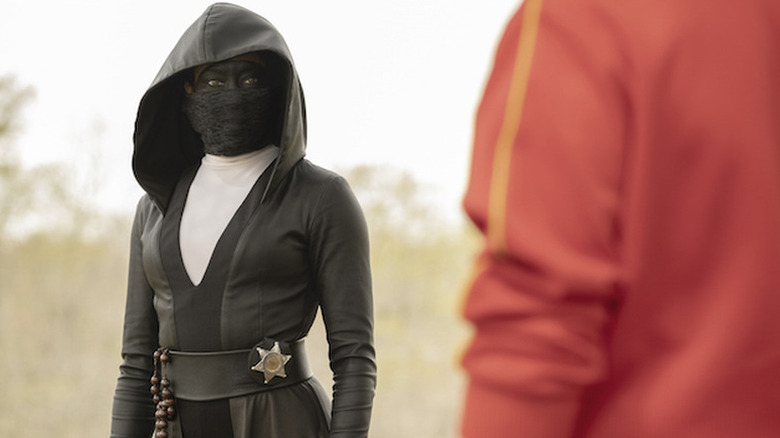
The miniseries has offered many writers the opportunity to tell long-form stories that are too sprawling for a film but too... well, limited... for a full series. Damon Linfelof took full advantage of the format with "Watchmen," his adaptation of Alan Moore and Dave Gibbons' graphic novel. Set 34 years after the events of the comic, it follows Tulsa, Oklahoma police detective Angela Abar (Regina King), aka Sister Night, whose investigation of the city's police chief (Don Johnson) leads her to a white supremacist group inspired by the writings of Rorschach.
More than almost any other TV creator, Lindeloff thrives when working with fewer episodes (see "The Leftovers"), and "Watchmen" creates a sprawling and thematically rich world in nine brief parts. More than just a sequel to the comic, "Watchmen" uses the very idea of superheroes to explore the role of vigilantism in our justice system. It's also an incisive and radical examination of American racism, using the 1921 Tulsa Black Race Massacre to explore how prejudice persists to this day. If nothing else, "Watchmen" is proof that comic book adaptations aren't just for kids.
11. Tinker, Tailor, Soldier, Spy (1979)
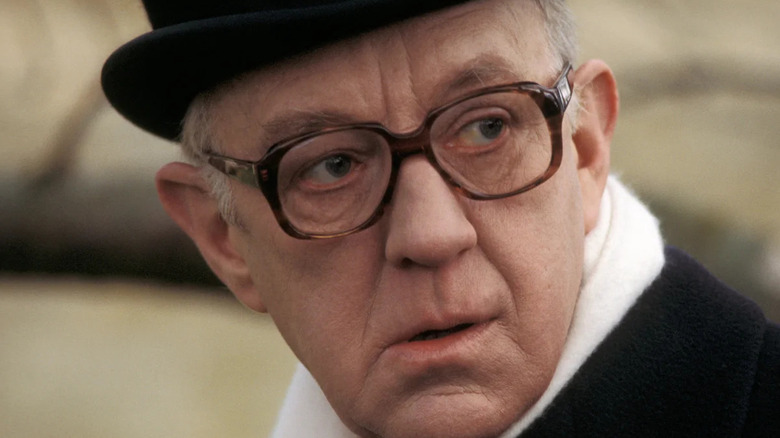
The spy novels of John le Carré have oft been adapted for film and television, with recent miniseries like "The Night Manager" and "The Little Drummer Girl" proving the author's staying power. However, there is perhaps no better TV adaptation of le Carré's work than the 1979 miniseries "Tinker, Tailor, Solider, Spy." Alec Guinness plays George Smiley, a career MI6 agent who's been forced into retirement, only to be brought back in to suss out a Soviet spy working within British Intelligence.
When Gary Oldman played Smiley in the 2011 movie version le Carré's novel, the esteemed actor had some big shoes to fill, as Guinness had earned critical raves and a BAFTA TV award for his performance. Guinness's version of Smiley stands in stark contrast to other renditions of the role, who are usually younger and more physically relaxed. He brings a world-weariness, as well as a deep vulnerability over the many humiliations his career has brought upon him. Guinness reprised the role to great success in 1982's "Smiley's People," for which he won another BAFTA TV prize.
10. Mare of Easttown (2021)
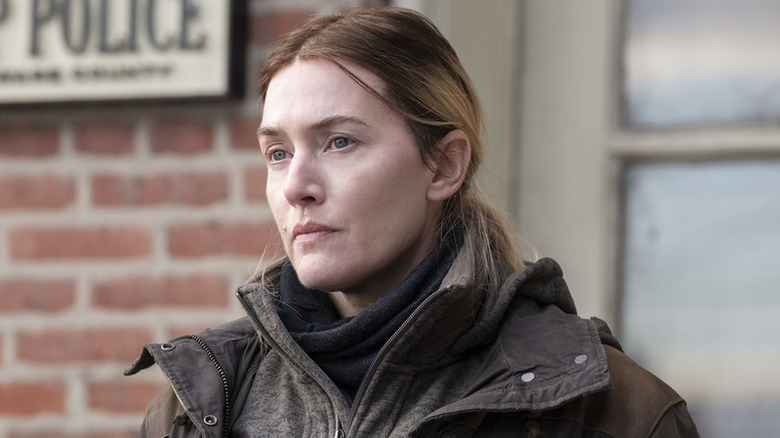
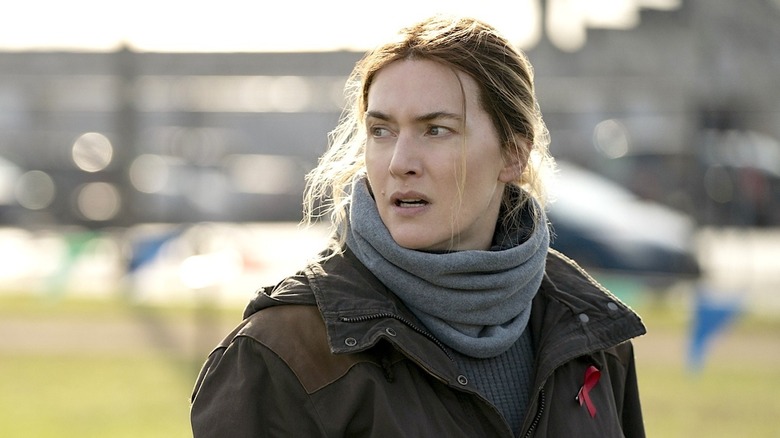
Some of the best miniseries are showcases for actresses, with Jessica Lange, Reese Witherspoon, and Nicole Kidman giving some of their career-best performances on television. That's also true of Kate Winslet, who's perhaps never been better than she was on "Mare of Easttown." She plays Mare Sheehan, a detective sergeant from the fictional town of Easttown, Pennsylvania, investigating the murder of one young girl and the disappearance of another years prior.
Like any great detective series, "Mare of Easttown" is as much about the investigator as the investigation. Mare Sheehan is one of the best female TV detectives of all time, a woman haunted by her failures on the job and in her personal life. Winslet handily won her second Emmy as best actress in a limited series or TV movie for her performance (she previously won for "Mildred Pierce"), which allows her to be flawed, brilliant, and brave. Whether or not "Mare" returns for a second season is unclear, but one thing's for certain: you'll never pronounce "water" the same way again.
9. John Adams (2008)
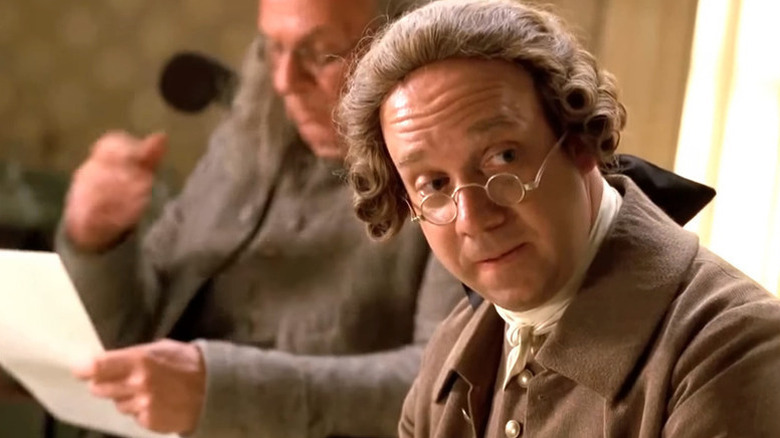
Most biopics focus on a specific era, as the entire span of birth to death can prove too daunting for one movie. Not so with a miniseries, which can take as many episodes as necessary to explore the many transformations a person takes throughout their life. That's especially true of "John Adams," which depicts the many roles that John Adams (Paul Giamatti) played in the creation of the United States of America, as one of its Founding Fathers and its second President.
Unfolding over seven episodes, "John Adams" takes the time to explore both Adams' political and personal life, with Laura Linney standing out as his wife, Abigail. The real meat of the show, however, comes from its depiction of America's turbulent founding, as Adams partners with the likes of George Washington (David Morse), Thomas Jefferson (Stephen Dillane), Benjamin Franklin (Tom Wilkinson), and Alexander Hamilton (Rufus Sewell) to hash out what the nation will become. As directed by Oscar-winner Tom Hooper, "John Adams" made history come vibrantly to life, and its efforts were rewarded with 13 Emmys.
8. The Night Of (2016)
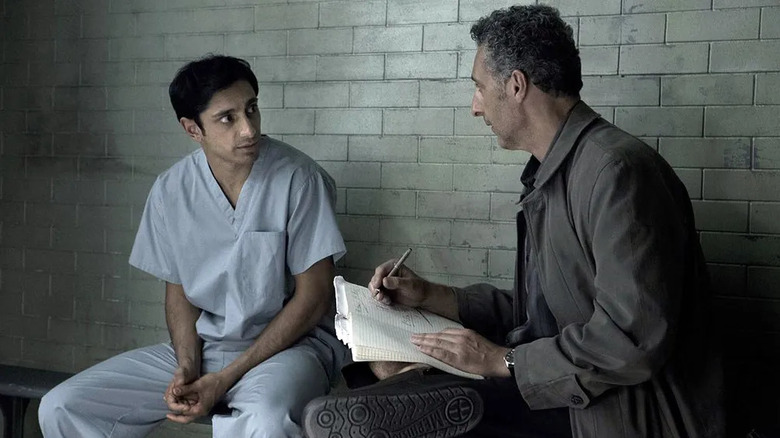
Despite its rocky production history, "The Night Of" turned out to be one of the great crime dramas of the 21st century. Originally starring James Gandolfini before his untimely death in 2013, it eventually found its way to John Turturro, who took over from Robert De Niro. Turturro plays John Stone, a beleaguered defense attorney representing a Pakistani-American college student, Nasir Kahn (Emmy-winner Riz Ahmed), wrongly accused of murder.
There's nothing particularly radical about "The Night Of," which was adapted from the BBC miniseries "Criminal Justice" by Steven Zaillian and Richard Price. Yet in its efficiency, it proves that if a formula isn't broke, don't fix it. It's clear from the first episode Naz is innocent, yet the deck is stacked against him thanks to circumstance and bad luck. The real suspense, therefore, comes from how Stone will prove his innocence with few resources and even fewer lucky breaks. Released in the summer of 2016, "The Night Of" also examines how the criminal justice system disproportionately targets immigrants and people of color, making it both timely and entertaining.
7. Twin Peaks: The Return (2017)
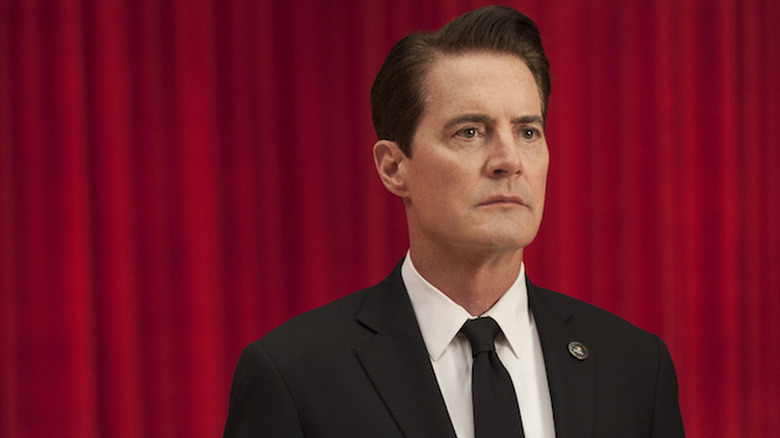
The revival has ramped up in popularity in the last decade, with everything from sitcoms to dramas trying to cash in on big ratings drawn from nostalgia. The very best TV show revival is undoubtedly "Twin Peaks: The Return," an 18-episode deep dive through the looking glass. 25 years after FBI Special Agent Dale Cooper (Kyle MacLachlan) disappears into the Black Lodge, he re-emerges in the form of Dougie Jones intent on defeating his evil doppelgänger and saving slain prom queen Laura Palmer (Sheryl Lee) from death.
What makes "Twin Peaks: The Return" stand out amongst other revivals is its refusal to function merely as fan service. Instead, David Lynch and Mark Frost use the characters and lore of "Twin Peaks" as a springboard to explore deeper questions about life, death, and our inability to change our fates. Inso doing, Lynch and Frost not only rehabilitate the reputation of the original "Twin Peaks" — which left the airwaves in 1991 after just two seasons — but also create a singular work of television that stands apart from its inspiration.
6. Chernobyl (2019)
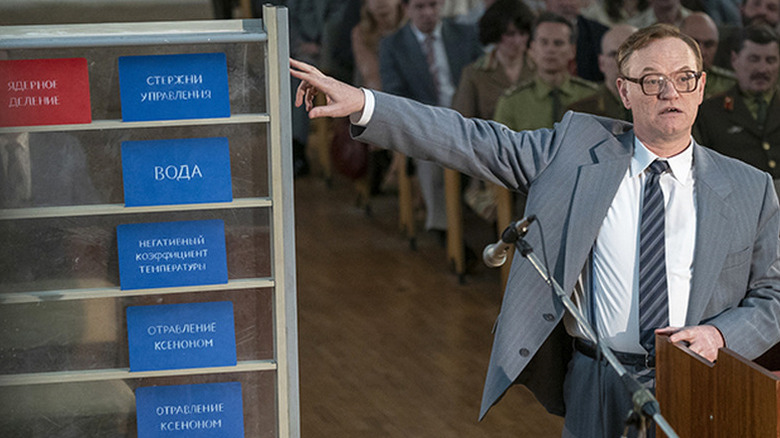
From its inception, the great benefit of a miniseries is the time it allows to explore vast, complex subject matters. That's certainly the case with "Chernobyl," which recounts the nuclear power plant disaster that rocked the USSR in 1986. Jared Harris stars as Valery Legasov, a Soviet chemist who is summoned by the Kremlin to assess what went wrong and assist with the cleanup efforts.
Written by Craiz Mazin and directed by Johan Renck, "Chernobyl" is both sprawling and intimate, assessing the fallout from the meltdown from several differing perspectives. More than just a history lesson, it shows the toll the disaster took on the first responders, employees, and volunteers who were exposed to radiation poisoning, with some truly gnarly special effects makeup aiding in that depiction. Told with precise attention to historical accuracy, the show is also riveting entertainment, unfolding like a great paranoid thriller from the 1970s. Buoyed by an all-star cast that includes Stellan Skarsgård, Emily Watson, and Jessie Buckley, "Chernobyl" was an Emmy-winning sensation that aired mere months before the COVID-19 pandemic reminded us all again of how fragile our system is in the face of disaster.
5. It (1990)
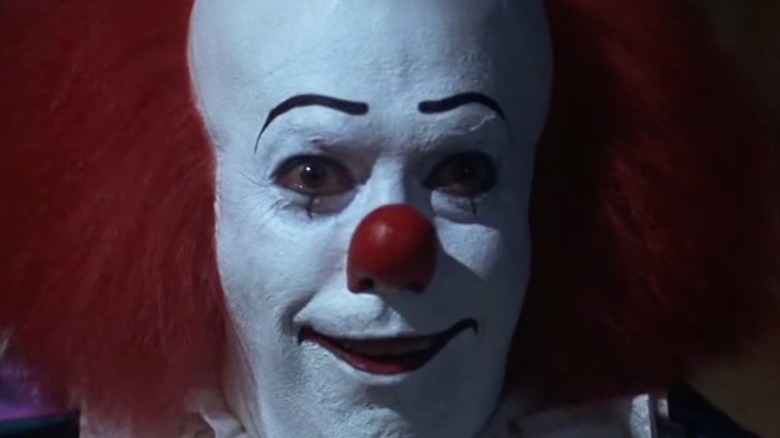
When Tim Curry died in 2026, he left behind many iconic roles on the stage and screen, including "It," a two-part adaptation of Stephen King's bestselling horror classic that is undoubtedly Curry's crowning achievement on TV. Set in the fictional town of Derry, Maine, "It" follows The Losers Club, a group of 1960s kids terrorized by an evil spirit who takes the form of Pennywise the Clown (Curry). Thirty years later, the friends reunite to defeat Pennywise once and for all.
Critical debate about the quality of "It" has varied wildly, especially since the release of Andy Muschietti's two-part movie adaptation. Much like those films, the TV version was praised for its first half — which evokes 1960s Americana with a sinister undertone — and mostly criticized for its second — which takes place in the present with a cast of '90s TV stars like John Ritter, Annette O'Toole, and Harry Anderson. Yet no matter what you think of the two halves, there's no denying the raw, terrifying power of Curry's performance as Pennywise, who will make you want to stay as far away from the circus as possible.
4. Lonesome Dove (1989)
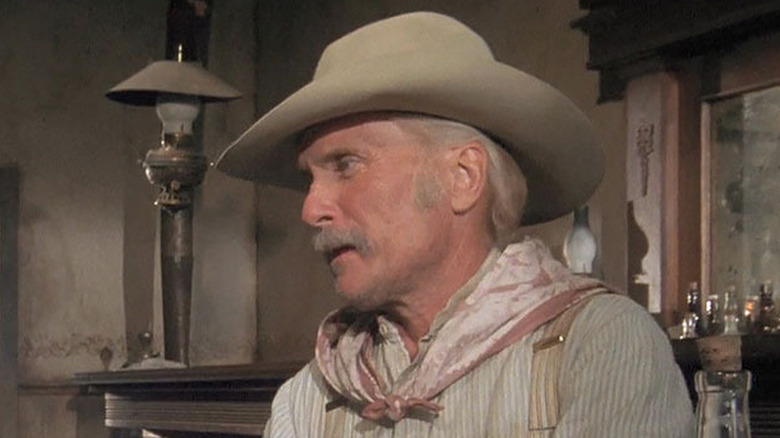
The works of Larry McMurtry have been adapted for the screen many times, including as Oscar-winning films like "The Last Picture Show" and "Terms of Endearment." His Pulitzer Prize-winning opus "Lonesome Dove" proved too unwieldy for a feature film, and was instead turned into a landmark miniseries that took home seven Emmys (although shockingly not one for Robert Duvall, who won his sole Emmy for another TV western). Set in the 1870s, it follows former Texas Rangers Augustus McCrae (Duvall) and Woodrow F. McCall (Tommy Lee Jones) who find a renewed sense of purpose after joining a cattle drive to the Montana territory.
Although westerns have existed since the beginning of television, "Lonesome Dove" revitalized the genre after it had fallen out of favor. What made the show wasn't just its epic ambition and sense of scope, but its emphasis on the humans at the center of that vast landscape. Duvall and Jones look as though they were born to ride atop a horse, and they're matched by the likes of Danny Glover, Diane Lane, and Anjelica Huston. It's hard to imagine Taylor Sheridan's TV empire without "Lonesome Dove" blazing a trail beforehand.
3. Band of Brothers (2001)
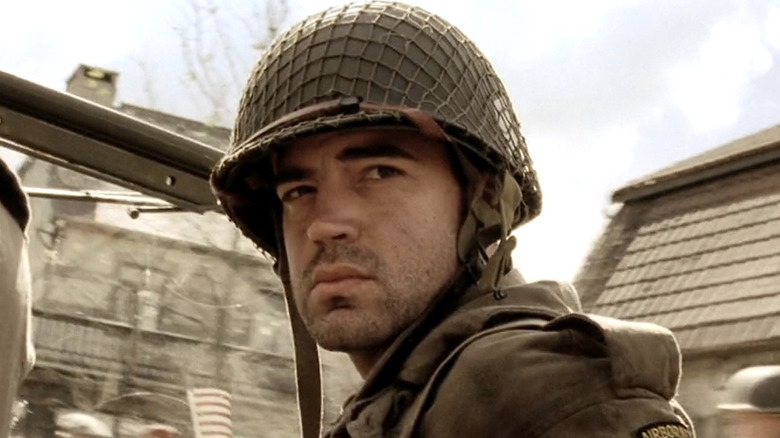
Following the critical and box office success of their Oscar-winning "Saving Private Ryan," Steven Spielberg and Tom Hanks brought the story of WWII to the small screen with HBO's "Band of Brothers." Adapted from Stephen E. Ambrose's non-fiction book, the series follows the men of East Company, aka "Easy Company," as they train to serve in Europe. During their time in basic training, the men forge an unbreakable bond that carries over onto the battlefield, where they'll need it the most.
Thanks in large part to the "Ryan's" commercial success , Spielberg and Hanks were given a blank check to mount "Band of Brothers" with accurate period detail and harrowing combat recreations. Like "Ryan," the 10-part series shows that it wasn't career officers who won WWII, but rather ordinary men who answered the call of duty when their country needed them. The cast is stacked from top to bottom, including Golden Globe nominees Damian Lewis and Ron Livingston. Among the best Steven Spielberg-produced TV shows, "Band of Brothers" honored the legacy of the brave men who beat back the rise of fascism.
2. Roots (1977)
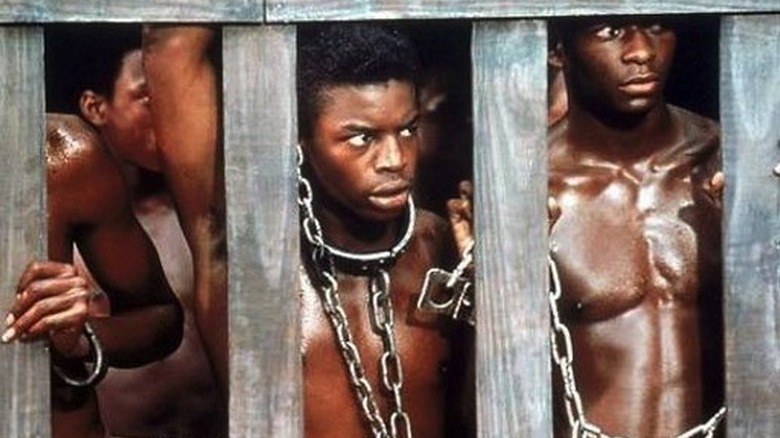
When "Roots" premiered in 1977, it was was a full-on phenomenon. Its series finale drew in unprecedented Nielsen ratings that still rank it amongst the most watched TV shows of all time. Adapted from Alex Haley's bestselling novel, the miniseries tackles nothing less than the history of American slavery, beginning in Africa in 1750 with the enslavement of Kunta Kinte (LeVar Burton) and ending with the liberation of his descendants after the Civil War.
Told in eight episodes, "Roots" assembled some of the biggest names in television, including eventual Emmy-winners Ed Asner, Olivia Cole, and Louis Gossett Jr. With its high production value and powerful performances, "Roots" feel like a television event that could not be missed, and every miniseries that's come since has followed its formula. You could seldom think of a more important subject matter to make such a huge deal out of, and "Roots" felt especially meaningful coming at a time when black voices were being highlighted on television with shows like "The Jeffersons," "Good Times," and "Sanford and Son."
1. Angels in America (2003)
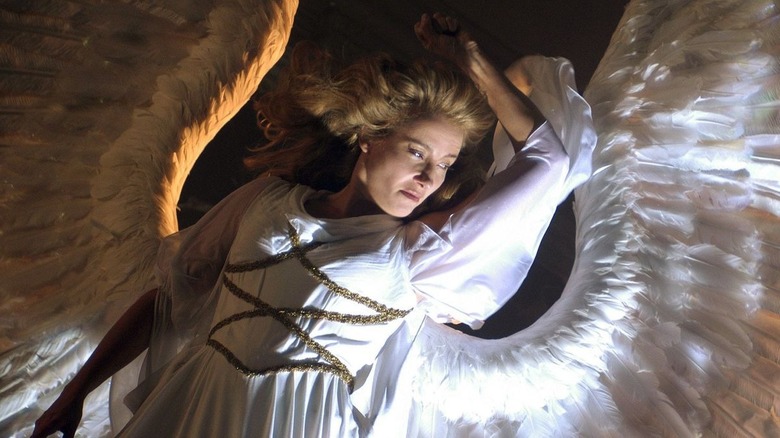
More than 20 years later, "Angels in America" stands heads and shoulders above every other miniseries not just in terms of craft, but cultural impact as well. An ambitious adaptation of Tony Kushner's Pulitzer Prize-winning play, the two-part series chronicles the AIDS crisis in 1980s New York through the perspective of multiple characters both real and imagined. At its core is Prior Walter (Justin Kirk), a gay man diagnosed with AIDS who is visited by The Angel America (Emma Thompson), who signals the end of the millennium.
HBO pulled out all the stops to bring Kushner's six-hour opus to the small screen, hiring Oscar-winner Mike Nichols to direct and stacking the cast with the likes of Al Pacino, Meryl Streep, Jeffrey Wright, and Mary-Louise Parker, all of whom won Emmys for their efforts. Although the two-part play proved too unwieldy for a movie adaptation, that didn't stop Nichols and his A-list below-the-line team from bringing a cinematic sheen to the production, including dazzling special effects, luminous cinematography, and a haunting Thomas Newman score. In many ways, "Angels in America" helped usher in the new Golden Age of Television, proving that prestige wasn't limited to theaters.