

5 Blade Runner Facts You Need To Know Before Watching Hunter Schafer's Prime Video Series
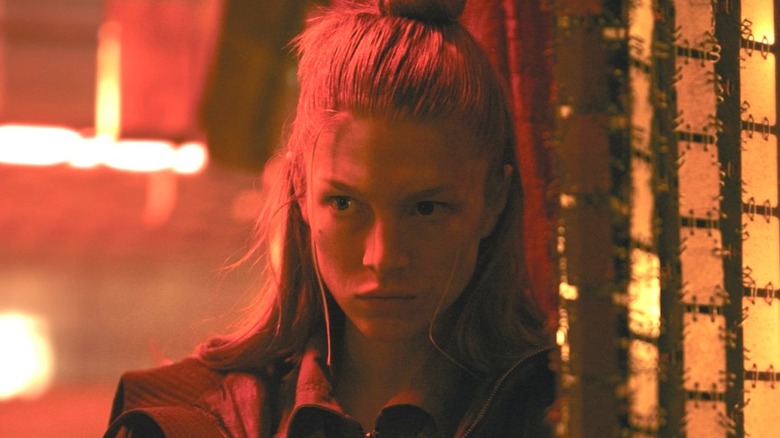
Science fiction TV series can always seem hard to pick up, as they are usually based on some pre-existing IP and/or have deep lore that requires a footnote explainer every time something new happens. If you're a fan of either Michelle Yeoh or Hunter Schafer and wanted to watch "Blade Runner 2099" but felt out of your depth, look no further for a place to catch up. Below, we have compiled all the important things to know before watching the Prime Video TV series when it premieres on November 25.
In addition to Schafer and Yeoh, "Blade Runner 2099" will also star Dimitri Abold. Silka Luisa is serving as the series creator and writer of multiple episodes, and Jonathan van Tulleken will direct the first two episodes of the series. This article will cover everything you need to know before watching those episodes, such as explanations about the timeline, understanding replicants and their blade runner counterparts, and how "Blade Runner 2099" relates to the previous two films.
What is Blade Runner about?
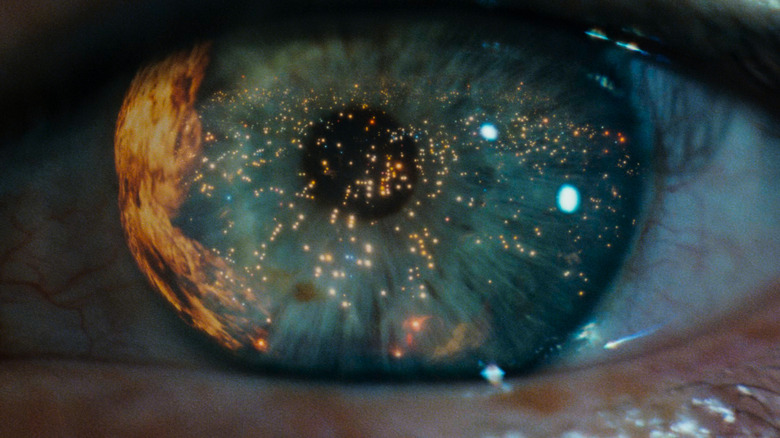
The "Blade Runner" franchise is based on Philip K. Dick's 1968 novel "Do Androids Dream of Electric Sheep." Aspects of that novel, specifically the character of Deckard and the concept of hunting robots who go rogue, were adapted into the 1982 film "Blade Runner" directed by Ridley Scott and written by Hampton Fancher and David Webb Peoples. The film stars Harrison Ford as Deckard and is considered one of the best sci-fi films to ever be released.
The main story of the first "Blade Runner" film is that four replicants — bioengineered humanoids — are charged with stealing a ship in order to return to Earth to find their creator. Deckard must pursue and kill them before they can do any more damage. The main consideration in the "Blade Runner" franchise is what makes someone human. Should replicants be treated with the same level of care as humans? Are replicants capable of empathy? There are also themes around mass surveillance, corporate domination, and the ethics of scientific innovation (and you can expect similar themes if you check out 15 TV shows to watch if you like "Blade Runner").
What are replicants?
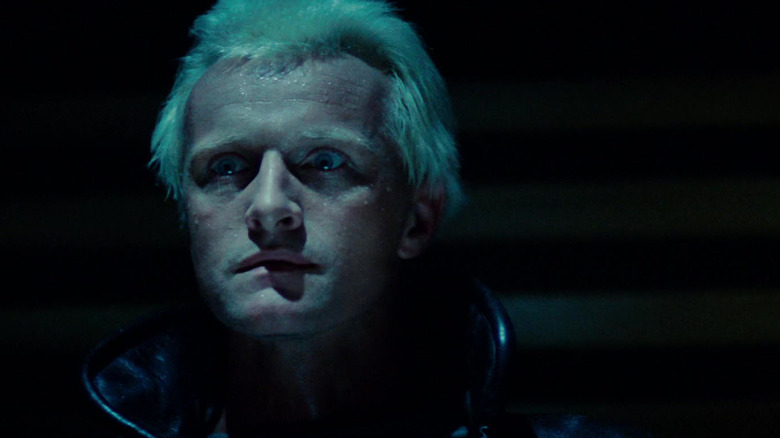
The simplest way to describe a replicant is an artificially intelligent robot (or bio-engineered entity) that's superficially indistinguishable from a regular human. In the first "Blade Runner" film, they are described as "more than human" by the Tyrell company that produces them en masse. In the opening sequence of "Blade Runner," they are revealed to have been produced mainly to perform dangerous labor in space. The replicants are notably faster, stronger, and seemingly deadlier than humans, which is why they are placed under strict operating rules and regularly "retired" (killed off).
Because replicants look so similar to humans, empathy tests are conducted to determine if someone is human or a replicant. The test is called the Voight-Kampff test, and failing the test is likely an indicator that the subject is a replicant and not human. The line between human and replicant gets blurrier as time goes on, especially because replicants can have memories of humans injected into their bodies. Additionally, "Blade Runner 2049" suggests that replicants are also now capable of human reproduction (more on that later). Interestingly enough, Hunter Schafer's character in "Blade Runner 2099" is a human who is pretending to be a replicant blade runner. This is sure to further expand and investigate the central theme around humanity.
What are blade runners?
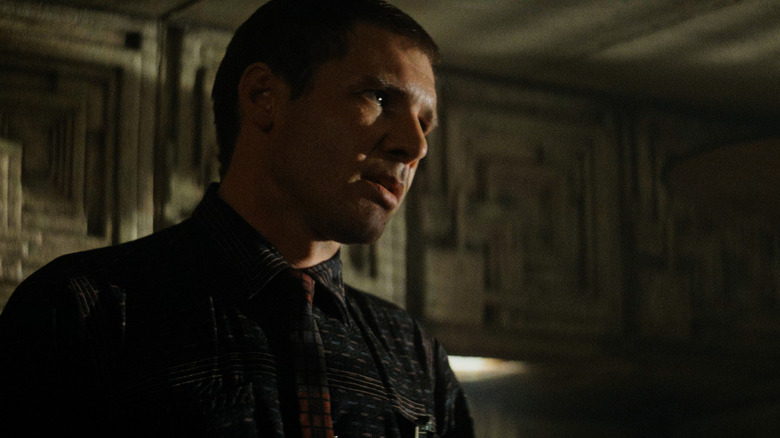
Interestingly, the term "blade runner" actually does not originate within the universe of either Scott's original film nor the original sci-fi novel. It instead comes from "The Bladerunner" by Alan E. Nourse, a novel that screenwriter William S. Boroughs referenced when trying to come up with a job title for Deckard during pre-production with Ridley Scott. In that novel, the "blade running" refers to the stolen scalpels taken by black market surgical tool smugglers. The name obviously stuck for the film, and is now used to describe the special police force tasked with hunting rogue replicants.
Michelle Yeoh plays the quintessential blade runner in "Blade Runner 2099," but she is also a replicant. Her character Olwen is facing her retirement date, and she finds an unlikely partner in Schafer's character Cora. Multiple layers of deception have been teased so far as to who is really a replicant, who is a blade runner, and who is occupying both forms of identity. This suggests that the series will definitely explore questions of who gets to be what. Or, as Yeoh said in an interview with People, "Are we born with humanity, or does it come with experience?"
How does Blade Runner 2099 connect to the rest of the franchise?
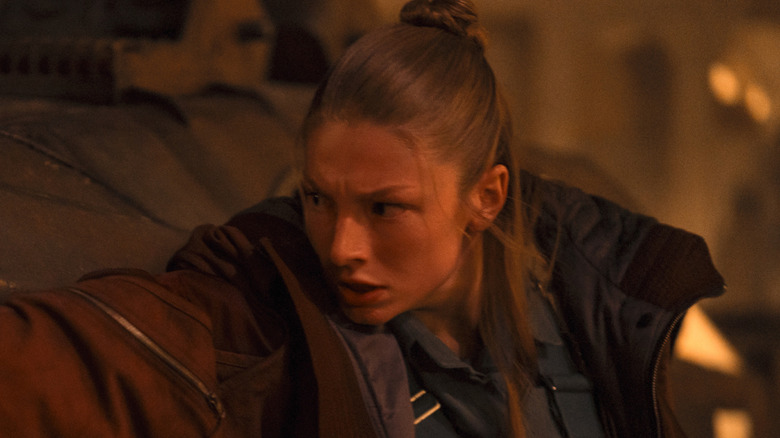
The Amazon Prime series "Blade Runner 2099" is a sequel to the "Blade Runner" and "Blade Runner 2049" films. Specifically, the story takes place 50 years after the events of "Blade Runner 2049" in a newly reborn Los Angeles. The modern landscape of Los Angeles, where humans are now being subjugated by replicants after an uprising, appears to be a direct result of the events of "Blade Runner 2049."
One caveat, though, is that showrunner Silka Luisa stated in an interview with CinemaBlend that the movie "is not directly connected to the show." That means it isn't going to explore the possibility of replicants reproducing or aging, even though it was a major plot point in "2049." Luisa adds that the intention with this series was to bring in audiences who haven't seen the previous films.
Still, "Blade Runner 2099" is expected to keep a lot of in-universe events as canonically occurring in the past. That includes the society of replicants and blade runners themselves, as well as the four-year retirement deadline for replicants. Michelle Yeoh's character Olwen will start the series just days from retirement/death as a replicant blade runner. Beyond that, it is unclear what other events from the previous films will turn out to be canon. Additionally, "Blade Runner 2099" should have no connection to the animated series "Blade Runner: Black Lotus" that is streaming on Crunchyroll.
What is the Blade Runner timeline?
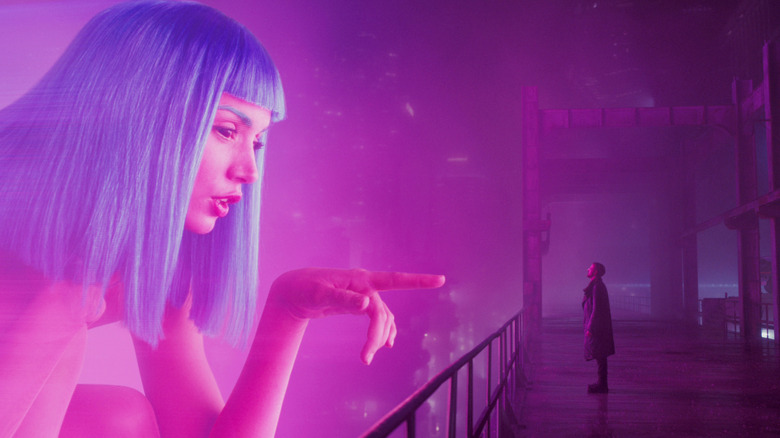
The events of the original "Blade Runner" film take place in 2019, including Deckard's hunt for the four rogue replicants and budding relationship with Rachael. In 2032, the events of "Blade Runner: Black Lotus" take place, bridging the gap between "Blade Runner" and "Blade Runner 2049." The animated series is a standalone story that follows a woman named Elle who is piecing together her lost memories alongside an ex-soldier named Joseph.
The events of "Blade Runner 2049" take place in the year 2049. K (Ryan Gosling) is tasked with covering up the shocking discovery that the replicant Rachael (Sean Young) appeared to have birthed a daughter with Deckard. K decides to reunite Deckard with his daughter instead of killing him, and ultimately dies.
Finally, in the year 2099, the events of "Blade Runner 2099" will take place. This puts it 50 years after the events of "Blade Runner 2049," and 80 years since the original "Blade Runner" film. There appears to have been a replicant uprising that has led to Los Angeles being controlled by replicants, and humans are relegated to the margins of society.