

5 Most Disappointing HBO Show Cancellations, Ranked
HBO is one of few networks that can confidently claim their best original series list takes up space on the best-series-ever-made list. That 40-plus year reputation for quality original programming makes it even more notable when a show doesn't get to write its own farewell.
For every extended stay — like "Game of Thrones," "True Blood," and "Curb Your Enthusiasm" — there are others that were cut short but are still referenced among the best. Of course, there are a boatload of different reasons a show can get canceled. Still, if a show's story is well-told, its world is well-realized, and its characters are well-written, the blow of its abrupt departure can feel pretty heavy. So, to spare us the wait for a "previously on..." segment that will never come, here are the five most disappointing HBO show cancellations, ranked.
5. Winning Time: The Rise of the Lakers Dynasty (2 Seasons)
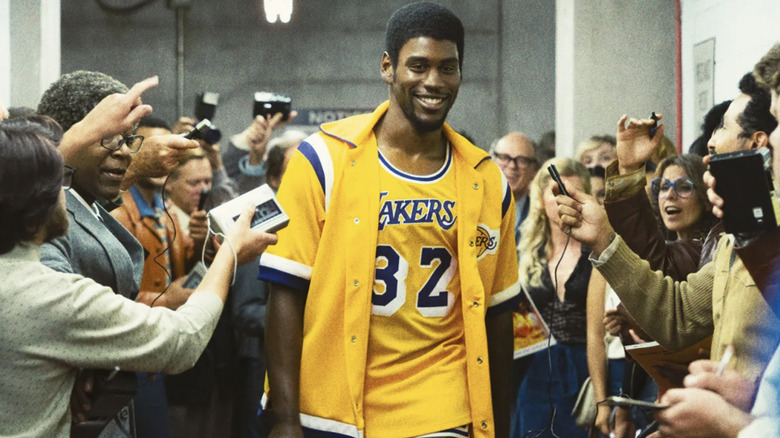
"Winning Time: The Rise of the Lakers Dynasty" sounded like a story fit for Hollywood. The biographical sports drama, centering former Lakers owner Jerry Buss (John C. Reilly) and a young Magic Johnson (Quincy Isaiah) during the "Showtime" era of the NBA franchise, debuted on HBO in 2022. The goal, according to co-creator Jim Hecht, was to create a "Friday Night Lights"-style show about the Lakers. Mixing drama, flashy filmmaking, acting heavyweights, and one of the most recognizable brands in sports seemed like a game plan that would lead to a long run... until the show got eliminated after Season 2.
While a lot of viewers voiced disappointment online, the cancellation didn't entirely come as a surprise. In 2023, the Writers Guild of America and SAG-AFTRA strikes occurred, which unfortunately hindered promotion. According to Vulture, HBO had already been prepping for an early exit, due to a ratings decline — even having producers create an alternate, more reflective and hopeful ending to what would be the series finale. (The original Season 2 finale of "Winning Time" concluded with the downer of the Lakers losing in the NBA Finals to their archrival Boston Celtics.) But one of the show's biggest hurdles involved Lakers legends, Magic Johnson and Kareem Abdul-Jabbar, whose stories were dramatized on screen, publicly criticizing the show and its creative decisions in 2022. This likely affected perception heading into the second season and slowed any forward momentum.
4. Lovecraft Country (1 Season)
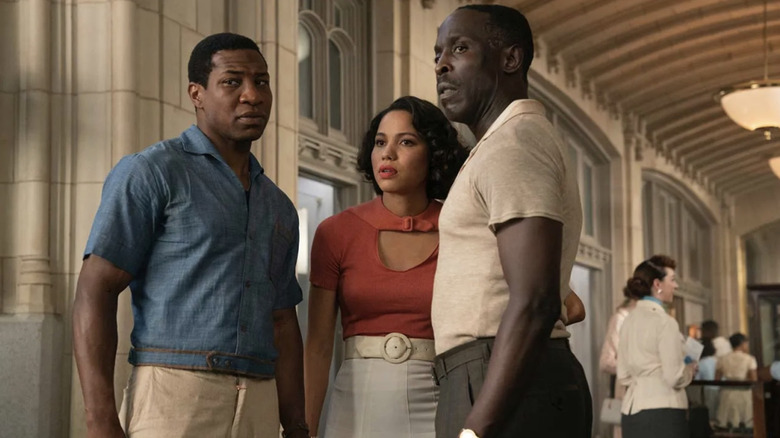
"Lovecraft Country" was one of 2020's most talked about shows. According to Deadline, the premier episode reached nearly 10 million streaming views, and the series finale hit 1.5 million viewers on HBO and jumped to the No. 1 trending topic on Twitter within its first 10 minutes. The series, following Atticus (Jonathan Majors), his friend Letitia (Jurnee Smollett), and his uncle George (Courtney B. Vance) on a road trip across the Jim Crow South in search of his missing father Montrose (Michael Kenneth Williams), was an ambitious mash-up of sci-fi, horror, fantasy, and social commentary. But despite its popularity and universal acclaim, including 18 Emmy nominations and two wins, "Lovecraft Country" was pulled off the road after one season.
Among discussions some disappointed viewers had online about the news, and insider claims of an unhealthy work environment, HBO stated that it ultimately came down to an inability to agree on a creative direction with then showrunner Misha Green. The period drama was based on a novel of the same name by Matt Ruff that had served as the perfect narrative road map for Season 1. Since a second season would depart from the novel (à la the changes "Game of Thrones" makes to the books), HBO seemed to express less confidence. Green described her own map for Season 2 as, "[Carrying] on the spirit of Matt Ruff's novel by continuing to reclaim the genre storytelling space that people of color have typically been left out of."
3. Carnivàle (2 Seasons)
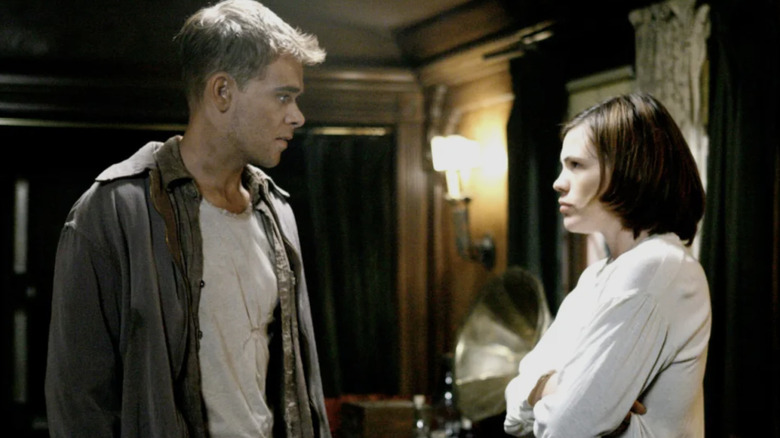
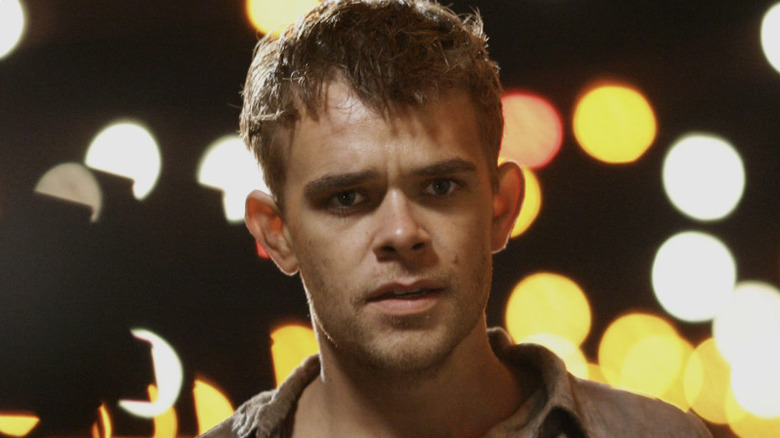
Set during The Great Depression in the American Dust Bowl, "Carnivàle" was about a young fugitive named Ben Hawkins (Nick Stahl) who, after his mother's death, joins the crew of a traveling carnival. During their travels, Ben and others discover that life's everyday hardships pale in comparison to the various supernatural oddities that plague them. Debuting in 2003, "Carnivàle" preceded "Lost" by a year and thus is often credited with being the true pioneer of that era's wave of serialized mystery-box shows. With troubled characters, a seemingly sprawling mythology, and a dual narrative involving the darker side of religion, the parallels point to similar success. However, even after collecting five Emmys, "Carnivàle" was shut down after Season 2, well before the six-season plan from show creator Daniel Knauf could come to fruition.
Unfortunately, the viewership trajectory for "Carnivàle" didn't justify the production costs for HBO. But that didn't stop a lot of the show's fans from voicing their disappointment about the unfinished story. In 2005, HBO chairman and CEO at the time, Chris Albrecht described what it was like receiving the negative reaction firsthand. "Never have we gotten besieged the way we have been besieged by 'Carnivale' fans for deciding not to go on with the third season of that show," he said. "I mean literally 50,000 e-mails over a weekend and I don't mean the first weekend."
2. Rome (2 Seasons)
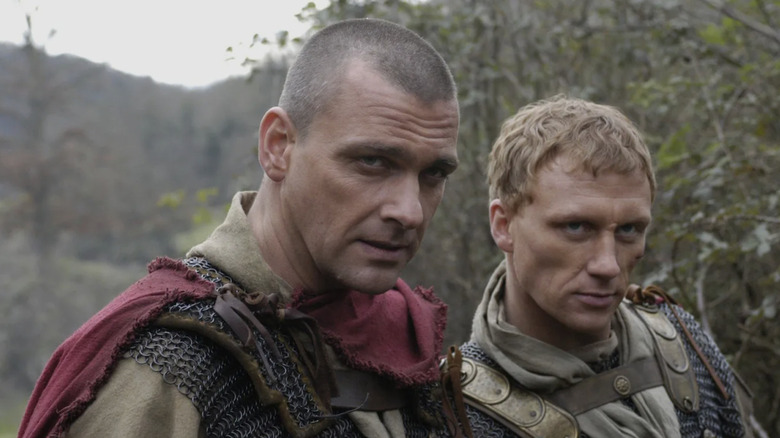
Occupying the throne as HBO's most sprawling historical drama series of the mid-'00s, "Rome" was a nearly $10 million per episode behemoth. An HBO and BBC co-production, the series dramatized ancient Rome's rise to becoming an empire through the perspectives of two Roman soldiers, Titus Pullo (Ray Stevenson) and Lucius Vorenus (Kevin McKidd). Intricate world-building, grittiness, and palace intrigue quickly made "Rome" a hit with critics. It won seven Emmys and served as an international breakout vehicle for several actors, including Stevenson and Tobias Menzies, who played Marcus Junius Brutus, one of Julius Caesar's assassins. But right when it was starting to look invincible, the gargantuan costs led to the fall of "Rome" in Season 2.
For anyone wondering why "Rome" was canceled, when its epic production costs weren't enough to derail the first season, then HBO Chairman and CEO Chris Albrecht stated in 2006 that the show was originally developed as a miniseries. HBO had a two-year contract with BBC, and there was no guarantee they would be on board to help shoulder the weight of more seasons. While some viewers question why the even more expensive "Game of Thrones" received the longevity that "Rome didn't," series creator Bruno Heller shared his view in 2014. "The mistakes we made are the mistakes 'Game of Thrones' learned from," he told Entertainment Weekly. "['Rome'] ended for reasons other than running out of things to say. There's a sense that there's unfinished business."
1. Deadwood (3 Seasons)
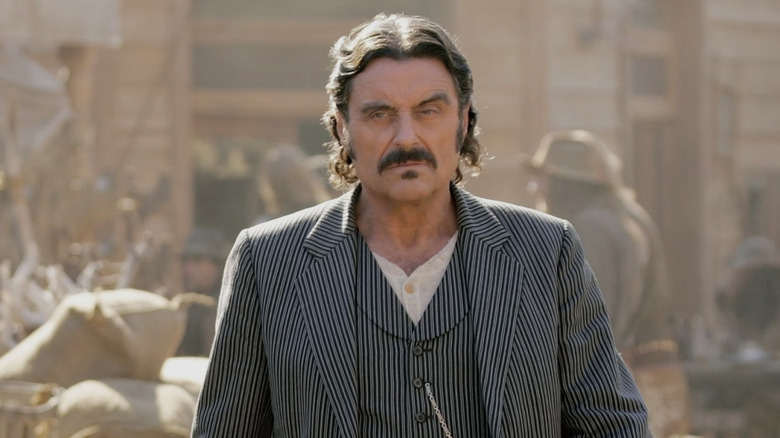
HBO's prestige Western, about the inhabitants of the lawless 1800s South Dakota mining town, ran for three seasons. Crafted with a bold, distinct style by series creator and writer David Milch (known for his precise, Shakespearean dialogue), it won eight Emmys and one Golden Globe. And through introductions of legendary characters like Seth Bullock (Timothy Olyphant) and Al Swearengen (Ian McShane), the show immediately staked its claim on the HBO playing field. So why didn't "Deadwood" get a fourth season? Word on the street was that a standoff led to "Deadwood" getting shot down.
In 2006, when Milch turned down an offer to conclude the series with an abbreviated fourth season, the show was never picked back up after Season 3. Many of the show's fans were irate – even leading to an online protest campaign that drew an apology letter from HBO. Thankfully, they would strike gold years later with 2019's "Deadwood: The Movie" that returned most of the original cast to give the story a proper ending. In an interview with The Hollywood Reporter, then HBO President Carolynn Strauss talked about giving "Deadwood" a conclusion. "I think for everybody who was really involved in the show, it was a bit of an unfinished symphony," she said. "It was the fans who were clamoring for the show to come back. [We] really wanted to make something satisfying for the hard-core 'Deadwood' watchers."