

The Rings Of Power Season 3 Clears Up A Confusing 4-Year Sauron Detail
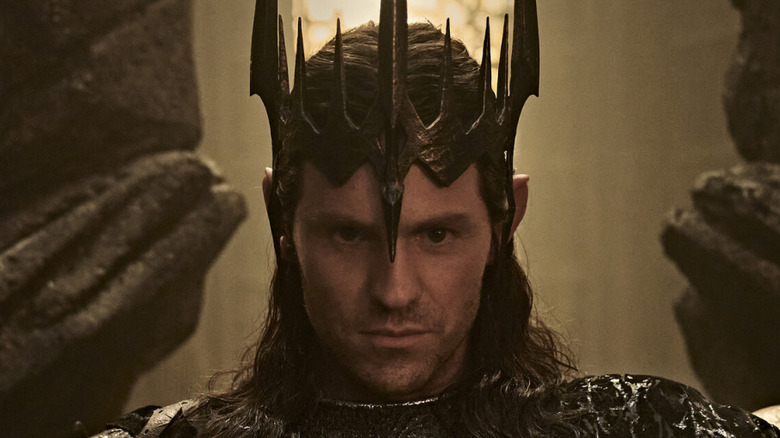
Contains spoilers for "The Lord of the Rings: The Rings of Power" Season 3, Episode 1.
Less than three minutes into the premiere of Season 3 of "The Rings of Power," we get a line that finally clears up a confusing question that has stuck around since the Season 1 finale in 2022: How involved was Sauron in making the Elven rings, and did he touch them? It sounds like a minor detail on the surface, but remember, we're talking about a magical world where a Dark Lord is currently forging jewelry as part of a plan for world domination. His influence over the life-giving Elven rings matters.
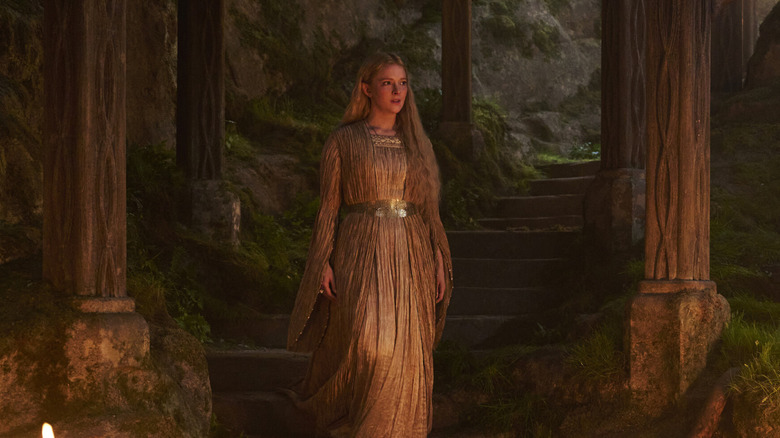
That's why it's helpful when, a few minutes into the latest season, we get a line from Galadriel's (Morfydd Clark) opening monologue that talks about "the Three Elven Rings, forged without Sauron's touch. In their powers of protection and healing, two Elven realms endure, Lindon and Rivendell, fighting to hold back the shadow."
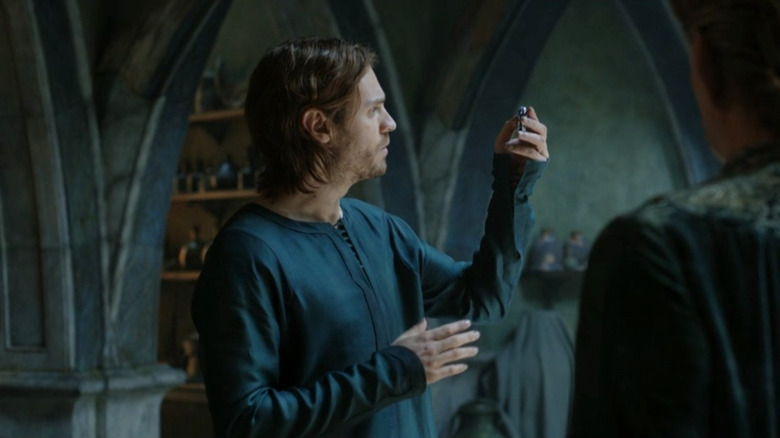
See that? Not just "forged without Sauron." The show has gone out of its way to definitely state that Sauron never touched the Three Elven Rings, putting to bed a question that has created confusion since the Dark Lord, the true identity of Halbrand (Charlie Vickers), helped the Elven smith Celebrimbor (Charles Edward) cook up the magical ring formula to close out Season 1.
What did Tolkien say about Sauron and the Elven rings?
The "did not touch" distinction is one that author J.R.R. Tolkien drove home more than once. In the book "The Fellowship of the Ring," Elrond says, "The Three were not made by Sauron, nor did he ever touch them." A page later, he reiterates it. "The Silmarillion" also explicitly states, "Therefore the Three remained unsullied, for they were forged by Celebrimbor alone, and the hand of Sauron had never touched them."
So, Tolkien was clear about Sauron not touching the Elven rings themselves. But that's where things get hazy with the "Rings of Power" story. Showrunners J.D. Payne and Patrick McKay have had to compress the Tolkien timeline and, consequently, have rearranged things quite a bit to get their serialized Second Age story to work. (It was an adaptive necessity, even if the showrunners have had to deal with plenty of backlash over specific creative liberties they've taken in the process.)
These changes have created confusion specifically around the Elven rings because in Season 1, we see Halbrand touching the mithril ingredients that go into the Rings of Power. When he helps make the rings for Dwarves and Men in Season 2, we also see him tampering with their creation — and he even swaps in some of his own blood as an ingredient for the rings for Mortal Men. This has left a question mark on whether the Dark Lord also influenced the Three Rings — something the new season has definitively answered.
Can Sauron control the Elven rings if he has the One Ring?
If Sauron hasn't touched or influenced the powerful Elven rings, can he control them when he forges the One Ring? Tolkien says yes. The passage from "The Silmarillion" describing the Three Rings as "unsullied" ends with this line: "Yet they were subject to the One."
The book also details Sauron's motivation for the One Ring: "The power of the Elven-rings was very great, and that which should govern them must be a thing of surpassing potency ... and while he wore the One Ring he could perceive all the things that were done by means of the lesser rings, and he could see and govern the very thoughts of those that wore them." This is immediately apparent when he forges the One Ring in the books. When he completes that project (which the showrunners have said will happen in Season 3 of their story as well), the Elves are immediately aware of him, even at a distance. They realize what he's done and take off their Rings of Power to avoid his control.
The Three Rings are so closely connected to the One Ring that Elrond says, in "The Fellowship of the Ring," that he believes, "When the One has gone, the Three will fail, and many fair things will fade and be forgotten." Hence the tragic fading of the Elves as an unavoidable side effect of Frodo succeeding in his quest in "The Lord of the Rings."