

How Sauron Turns Men Into Ringwraiths In The Lord Of The Rings
Hail, Friend! Beware of spoilers for "The Rings of Power" Season 3 below!
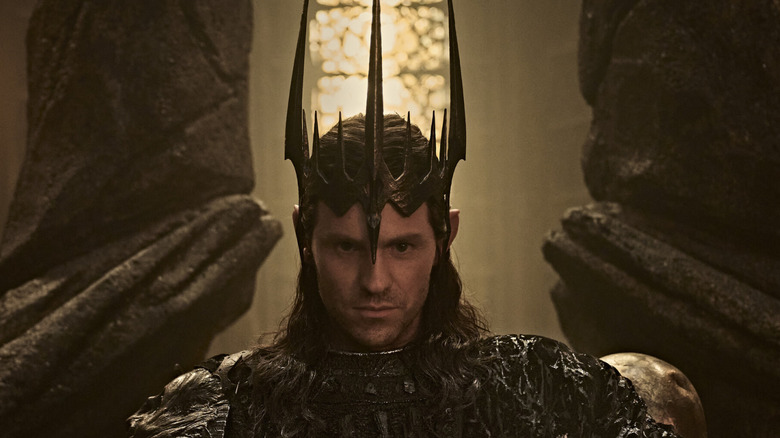
"The Rings of Power" Season 3 has wasted no time diving into the action. As the curtain lifts, the War of the Elves and Sauron is in full swing, and Sauron (who has had a dark and complex role in the prequel series so far) has unleashed his most fearsome servants: The Nazgnagôl. These are the ring-servants we meet in "The Lord of the Rings." So, why the name change? Because when they show up in the Second Age story of "The Rings of Power," the transformation into terrifying Ringwraiths hasn't happened yet.
As the Dark Lord lures these ambitious Men into his web, he gifts each one a Ring of Power. This grants them the success they crave in the short term, but ultimately brings them into the unseen spiritual world and binds them to his will. While Tolkien uses soft magic in his writing (i.e., undefined magic without clear rules or systems), he does give us a description of what the man-to-wraith evolution initially looks like in "The Silmarillion."
The author explains: "Those who used the Nine Rings became mighty in their day, kings, sorcerers, and warriors of old." He adds that "they obtained glory and great wealth," and they had unending life. They could even tap into the supernatural world. Tolkien says, "They could walk, if they would, unseen by all eyes in this world beneath the sun, and they could see things in worlds invisible to mortal men." So far so good. But there's a catch. Several of them, actually.
Over time, Sauron corrupts and enslaves the bearers of the Nine Rings
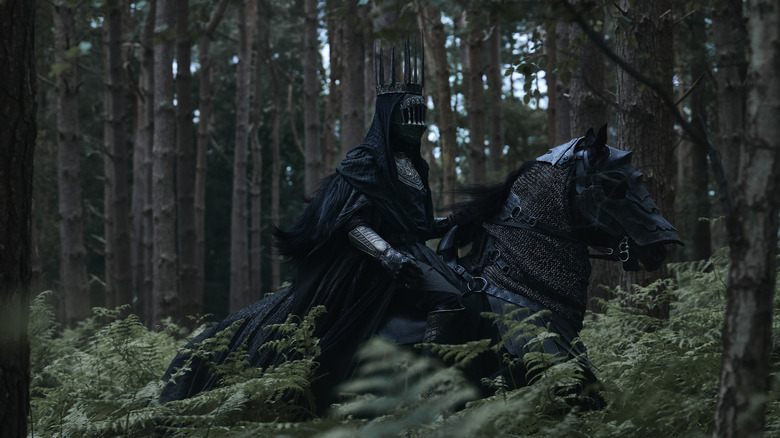
Those who wear the Nine Rings get a lot of nifty abilities. They are powerful, become rich, commune with the spiritual world, and don't die. But as Tolkien describes these advantages, he starts hinting at the darker side of what's happening. For instance, when he talks about their glory and wealth, he adds, "yet it turned to their undoing." When he says their life is unending, he follows it up with the line, "yet life became unendurable to them." When he describes how they can walk invisible and see things in the unseen world, he also says, "but too often they beheld only the phantoms and delusions of Sauron."
Not all of the future Ringwraiths are pure evil from the start (like we're used to seeing in "The Lord of the Rings"). Tolkien talks about how their Rings slowly corrupt them over time. Here's how he sums up the transformation: "One by one, sooner or later, according to their native strength and to the good or evil of their wills in the beginning, they fell under the thraldom of the ring that they bore and under the domination of the One, which was Sauron's." When that happens, the Nine become permanently invisible, living in what Tolkien calls the "realm of shadows," where the only person who can see them is their Dark Master.
What are the wearers of the Nine Rings called?
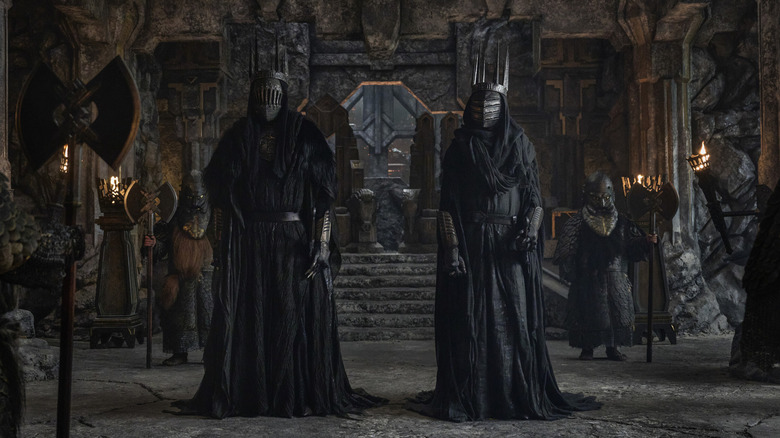
The chilling final line in "The Silmarillion" that sums up the shift from human to wraith goes like this: "The Nazgûl were they, the Ringwraiths, the Enemy's most terrible servants; darkness went with them, and they cried with the voices of death." But again, this isn't an instant transformation — which is why the "Rings of Power" series isn't calling them Nazgûl or Ringwraiths yet.
Instead, Patrick McKay and J.D. Payne have come up with the name Nazgnagôl. The showrunners have dealt with some backlash from the series, and they made sure to explain the new, non-canon title, telling Empire: "The word 'Nazgûl' means 'Ringwraith' in the Black Speech of Mordor. But before they were Ringwraiths, we know that these were just men. So we were able to derive in the Black Speech that 'nagôl' could mean 'servant'."
So, the show's terminology translates as "Ring-servant." It's a nod to the bondage that each new wearer has to their ring, and their eventual slide into darkness — but it also acknowledges that the transition to the ghostly realm hasn't happened yet. Instead, what we're getting is a version of the Black Riders of "The Lord of the Rings" that are very much still alive, while also channeling a nascent version of the supernatural power that they will eventually wield with terrifying effect. Don't forget the One Ring, too (which we should see forged later in the season). Once that gets into the mix, expect the metamorphosis from Nazgnagôl to Nazgûl to kick into high gear.
The first four episodes of "The Rings of Power" Season 3 premiered on November 11.