

10 Best Twilight Zone Episodes About Aliens, Ranked
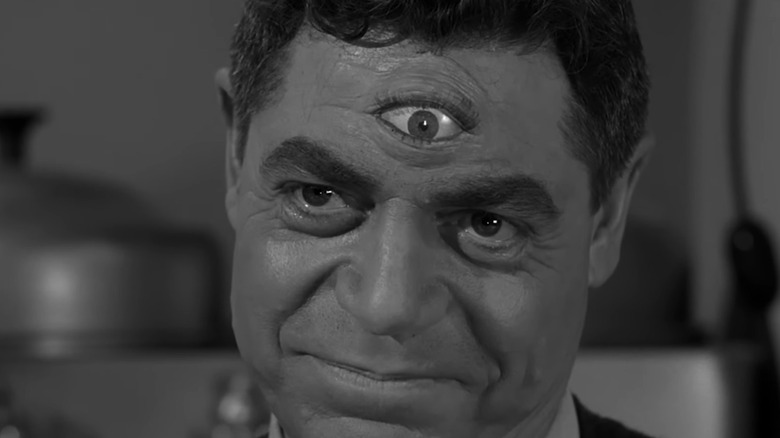
As one of the best sci-fi anthology TV shows, "The Twilight Zone" features many stories involving extraterrestrials. Whether it's episodes that see astronauts finding life across the cosmos or otherworldly visitors coming to Earth, Rod Serling's creation found inventive ways to incorporate aliens into its tales. True to the series' consistent subversion of expectations, they could come in peace or with far more sinister intentions. We're rounding up the best "Twilight Zone" stories showcasing intelligent life from other worlds, often with a signature closing twist that'll stick with the audience.
For the purposes of this article, we're only focusing on episodes from the original 1959 series. In keeping with the show's tradition for imaginative storytelling, these cosmic characters were unlike any other alien stories being told on television at the time. That distinction really makes them stand out in comparison to the '80s revival series or Jordan Peele's "Twilight Zone" reboot. These are the 10 best "Twilight Zone" episodes about aliens ranked, each ingeniously using the presence of extraterrestrials.
10. The Fugitive
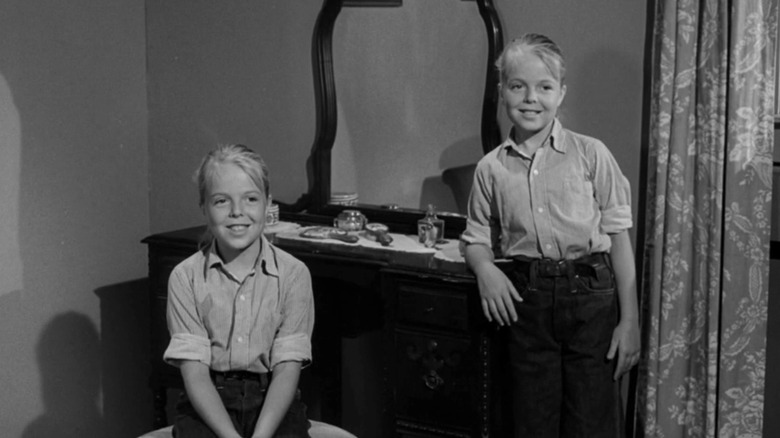
Sometimes, the most unassuming figures can be the most extraordinary characters, which informs the Season 3 episode "The Fugitive." The story revolves around the friendship between Old Ben (J. Pat O'Malley) and a young girl named Jenny (Susan Gordon). With Old Ben performing supernatural tricks to entertain the neighborhood kids, he is revealed to be an extraterrestrial disguised as a human. Jenny comes to Old Ben's help when pursuers from his planet arrive to forcibly take him back to their world.
"The Fugitive" feels like a bit of a fairy tale, but it's also a reminder that not every "Twilight Zone" episode needs to be so dark and intense to work. O'Malley plays his incognito alien as a kindly, if eccentric, old man with a cosmic secret that's finally caught up to him. Even as the story grows more outlandish, the warm dynamic that Old Ben shares with Jenny remains the emotional bedrock for the episode. As harmless as its protagonist, "The Fugitive" is a sentimental story of aliens just trying to get by among us.
9. The Little People
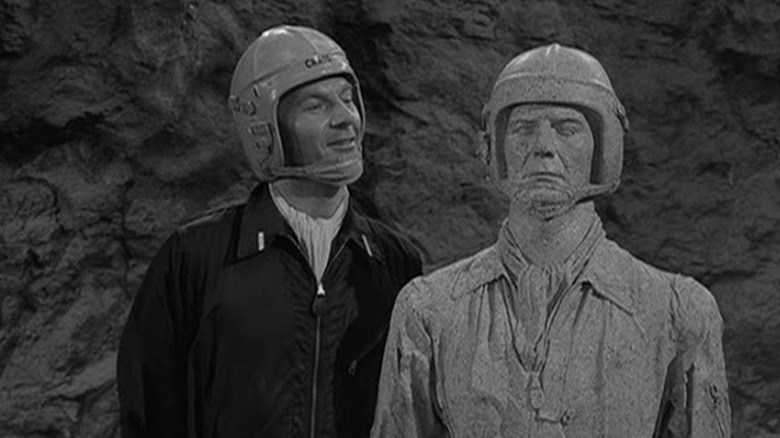
"The Twilight Zone" certainly isn't afraid to get silly at times, and occasionally, those more ridiculous narratives surpass expectations. The Season 3 episode "The Little People" has astronauts William Fletcher (Claude Akins) and Peter Craig (Joe Maross) stranded on a remote planet. As Fletcher repairs their spaceship, Craig discovers a race of tiny humanoids who fear him as a mercurial god due to his size and physical might. This discovery and forced adulation convinces Craig to remain behind on the planet before he learns there are far bigger beings in the cosmos.
"The Little People" is essentially a sci-fi riff on "Gulliver's Travels" while presenting a cautionary tale about delusions of grandeur. Maross plays his malevolently self-absorbed character well, and the effects to imagine a civilization of miniscule aliens helps sell the entire story. Similar to all morality plays that "The Twilight Zone" cooks up, this dynamic helps make that inevitable comeuppance all the sweeter to witness. A portrait of how power can quickly and dangerously go to one's head, "The Little People" rises above its admittedly campy premise.
8. Elegy
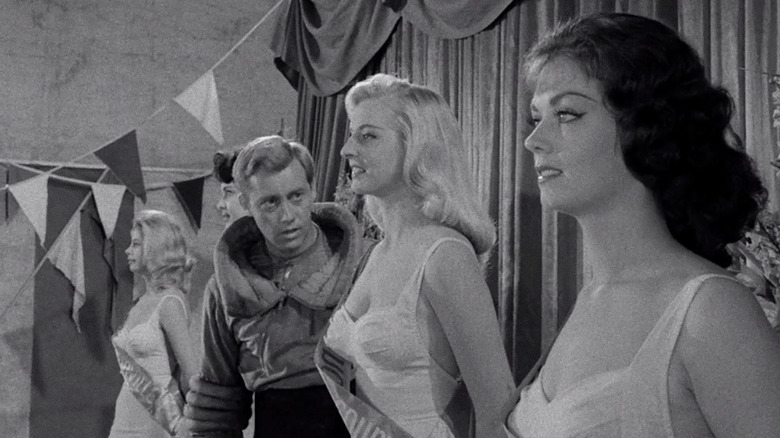
One of the more quietly unsettling "Twilight Zone" episodes about aliens is the Season 1 installment "Elegy." The episode begins with a trio of astronauts landing on an asteroid in the distant future, hundreds of millions of miles from Earth. Exploring their surroundings, the group finds the environment to be an immersive facsimile of 20th-century America. Investigating further, the group discovers that the community is populated by seemingly lifelike humans as they learn what the display's actual purpose is.
"Elegy" is another pulpy slow-burn narrative that gives way to something absolutely horrific when its true implications are revealed. The story may not involve extraterrestrials in the traditional sense, but the community's caretaker definitely has an inhumane quality to him juxtaposed with the spacefaring setting. For the vast majority of the episode, the characters think they're on an alien world, with its true nature tied to an even bigger and macabre twist. That earns "Elegy" a spot on this list, with the stakes cold, calculating, and certainly alien in a broader and looser definition of the term.
7. Third from the Sun
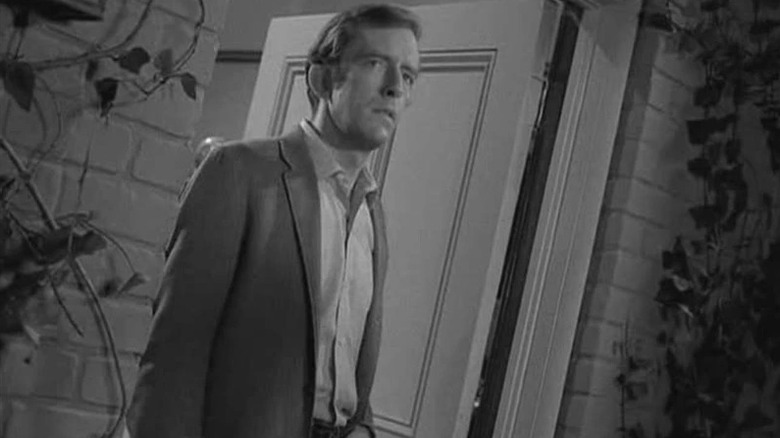
One of the recurring plot twists on "The Twilight Zone" is that the main characters audiences have come to know over the course of a particular story aren't human. This is the case in the Season 1 episode "Third from the Sun," which has a group of characters decide to leave their planet as an impending nuclear war looms. The ensemble is led by Will Sturka (Fritz Weaver), a scientist who plans to steal a spaceship to take his family and friends with him to a distant habitable planet. The big twist is that this planet, as you've probably guessed by now, is actually Earth, meaning Sturka and his civilization are extraterrestrial.
Even if it's clearly telegraphed a mile away, "Third from the Sun" doesn't have the worst plot twist in "The Twilight Zone." What makes it work is Weaver's performance, with his character racked with guilt over building the weapons that are now dooming his planet. Obviously, this feeds into America's own anxieties about nuclear warfare at the time, parallels that are repeatedly articulated. But as heavy-handed as some of this messaging is, "Third from the Sun" is still an entertaining story of families persevering and overcoming the odds with an otherworldly twist.
6. Hocus-Pocus and Frisby
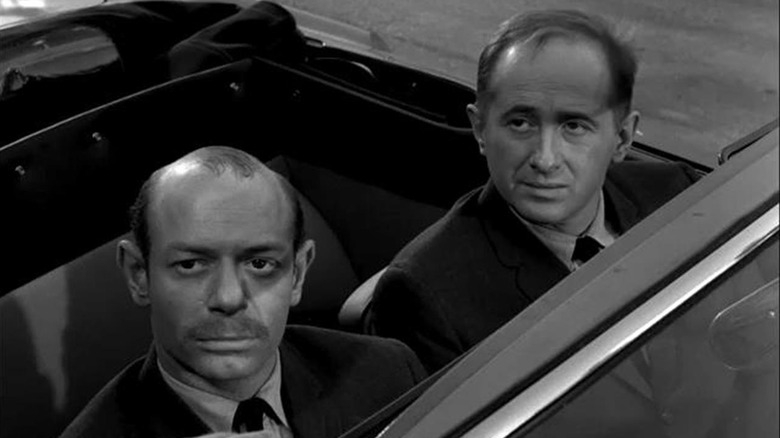
There aren't too many "Twilight Zone" stories with happy endings, but the Season 3 episode "Hocus-Pocus and Frisby" certainly qualifies. The episode is named for Somerset Frisby (Andy Devine), a larger-than-life personality in a small town known for constantly making up tall tales about his presumed exploits. While the town's human inhabitants are aware of Frisby's harmless self-aggrandizing, two extraterrestrials discreetly passing through the community are not. Convinced that Frisby's claims about himself are true, the impressed otherworldly visitors abduct him for further examination.
In fitting with the types of fabrications that Frisby weaves, "Hocus-Pocus and Frisby" feels like a tall tale rather than something overtly sinister. That tonal distinction carries over to the ending and how Frisby innocuously gets the better of his spacefaring captors. Those gentler and warmer tones are welcome in contrast to some of the more intense "Twilight Zone" narratives, something that Devine's performance helps articulate. A breezy story compared to some of the show's more intense fare, "Hocus-Pocus and Frisby" offers a nice change of pace.
5. People Are Alike All Over
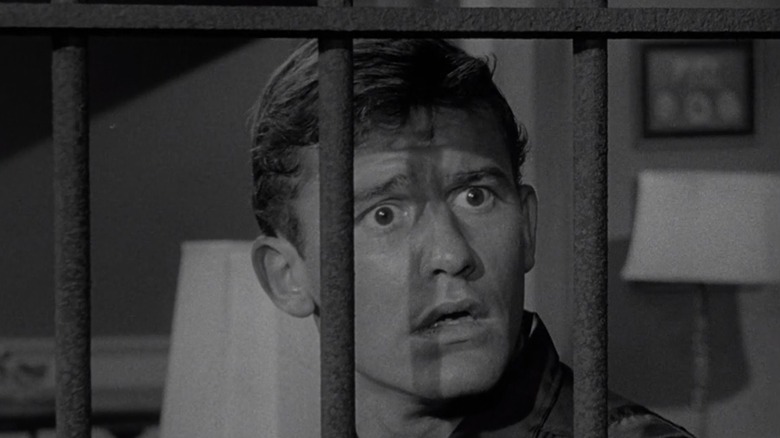
It's important to point out that America entered the Space Race against the Soviet Union while "The Twilight Zone" was being produced, informing some of its most notable episodes. This includes Season 1's "People Are Alike All Over," which follows a manned mission to Mars. Astronaut Sam Conrad (Roddy McDowall) is the sole survivor after his spaceship crashes on the planet's surface, and he's greeted by Martians. Put at ease by the aliens' human appearance, Conrad is seemingly warmly welcomed, but learns the dark truth about his new status quo and his hosts.
"People Are Alike All Over" has a pulpy sci-fi feel to it worthy of contemporary authors like Ray Bradbury, though the episode itself was written by Serling. What really elevates it is a strong performance from Roddy McDowall, one of the greatest character actors of all time. McDowall collaborated with Serling on several occasions, most notably in "Planet of the Apes" and "Night Gallery," and their work together here is a standout. A rollercoaster of alternating emotions right through to its final scene, "People Are Alike All Over" features incredible creative work across the board.
4. Will the Real Martian Please Stand Up?
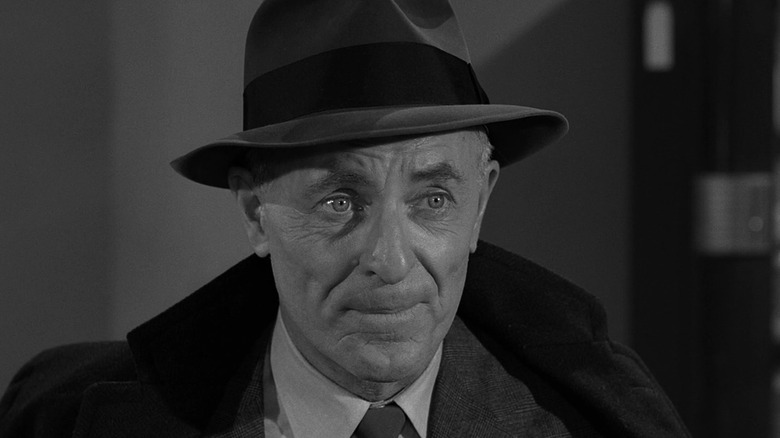
The Season 2 episode "Will the Real Martian Please Stand Up?" gives audiences two extraterrestrials for the price of one. The story opens with reports that a UFO has crashed and its otherworldly occupant has since taken refuge in a nearby diner. The authorities' search is complicated by the fact that a frozen bridge has also left a busload of passengers sheltering in the diner. This leads to an investigation of the colorful characters in the diner to identify which one of them is not actually of this world.
"Will the Real Martian Please Stand Up?" has one of the best "Twilight Zone" plot twists of the original series, which I don't want to give away here. Suffice to say, the episode's locked-room mystery setup proves to be bigger than its human characters anticipated. But even on a surface level, Rod Serling's choice to reframe an alien invasion tale in this format keeps audiences on the hook. The closing idea to place a twist within a twist elevates the story further to represent it being "The Twilight Zone" at its most memorable.
3. To Serve Man
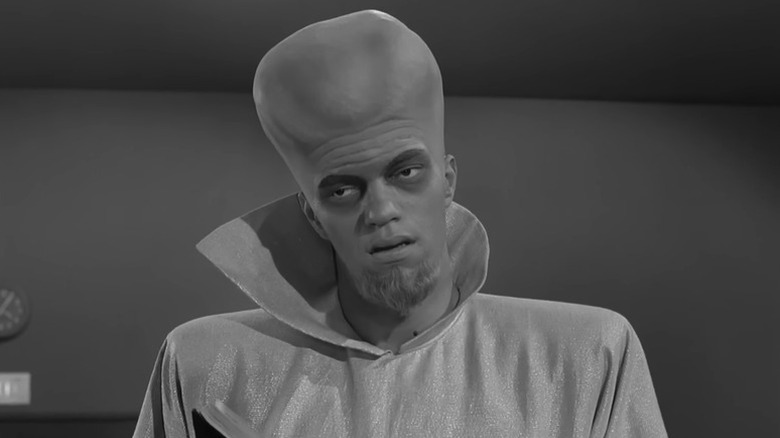
The Season 3 episode "To Serve Man" delivers what is arguably the most memorable plot twist from "The Twilight Zone." In an unusual move for the show, the story largely plays out in flashback as protagonist Michael Chambers (Lloyd Bochner) contemplates how he found himself in his precarious position. When a group of towering extraterrestrials known as the Kanamits arrive on Earth, they pledge to significantly advance humanity's technological capabilities. Chambers, a cryptographer, deciphers a book that the Kanamits leave behind to determine the apparent benefactors' disturbing true intentions.
The best "Twilight Zone" parody "The Simpsons" has done to date is a clear riff on "To Serve Man," and its big twist. That's really a testament to the story's staying power, blending a bit of admitted camp with sinister stakes. Beyond the way that the story ends, the Kanamits' physical appearance is one of the series' most memorable creature designs. "To Serve Man" feels like Rod Serling getting comfortable with subverting sci-fi B-movie tropes, and he does so to great effect.
2. The Invaders
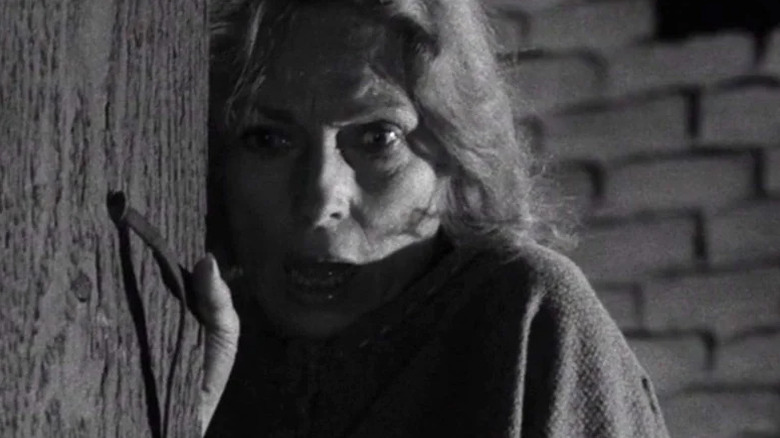
While Rod Serling penned many of the most beloved episodes of "The Twilight Zone," he certainly wasn't the only talented screenwriter working on the show. The best "Twilight Zone" episode not written by Serling that involves aliens is Season 2's "The Invaders." Penned by Richard Matheson, the episode is a largely silent story following a woman (Agnes Moorehead) who lives alone and is menaced by two pint-sized figures in her home. In the final scene, the true origin of these hostile characters — and the woman herself — is revealed to the audience.
"The Invaders" is one of the most rewatchable episodes of "The Twilight Zone," as viewers will feel compelled to revisit it and check for clues. The presence of a flying saucer relatively early on confirms that this is a story involving extraterrestrials, but not in the way viewers may expect. The episode is also the show at its scariest, maintaining a steady level of suspense and surprisingly brutal violence. Frighteningly focused, "The Invaders" is lean and mean in how it tells its otherworldly home invasion story right through to its closing shot.
1. The Monsters Are Due on Maple Street
Season 1 of "The Twilight Zone" was arguably the series' best, really brimming with imaginative ideas unlike anything else on television. Case in point: "The Monsters are Due on Maple Street," one of the best "Twilight Zone" episodes of all time, if not the very best. After a UFO passes overhead, the sleepy suburban community on Maple Street grows increasingly paranoid as incidents begin occurring around the neighborhood, convinced one of them is a disguised extraterrestrial. This descends into murderous violence, and friends and neighbors turn on each other, culminating in one of the best "Twilight Zone" endings as what's actually occurring is revealed.
What makes "The Monsters Are Due on Maple Street" all the more haunting is getting to see how idyllic the community is before the disturbing phenomena begins. The story starts in a Rockwellian vision of middle America, complete with white picket fences and children playing in the streets. This suburban harmony quickly gives way to total mayhem, demonstrating just how fragile this unity is, shattered by a handful of parlor tricks. "The Monsters Are Due on Maple Street" is "The Twilight Zone" at its most terrifyingly cynical, and even though we hardly see the extraterrestrials, their pervasive influence is felt throughout.