

The Wire Creator Rewrote Stringer Bell's Death Scene To Appease A Furious Idris Elba
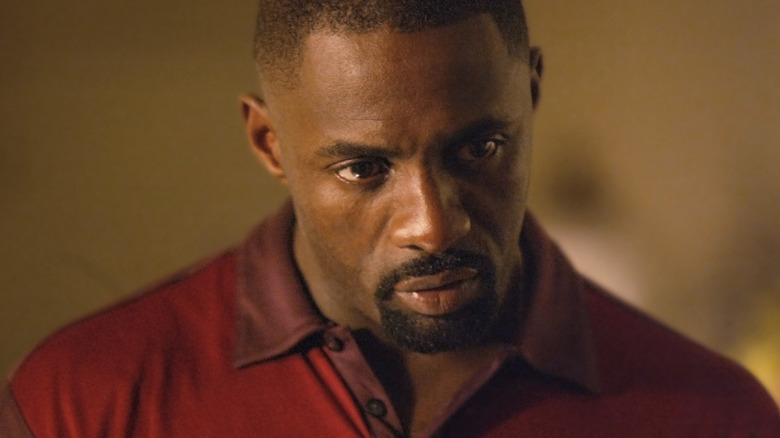
"The Wire" is full of truly memorable moments and faces, but some of them are simply more impressive than others. Two of the show's standouts, stick-up man Omar Little (Michael K. Williams) and drug lord Stringer Bell (Idris Elba), are mainstays whenever best HBO characters of all time are ranked ... and perhaps fittingly, their fates intertwine on the show.
For three seasons, Bell rises from an icy power behind the Barksdale Organization's throne to become the man pulling all the strings himself, acting like a businessman throughout it all and being as feared and hated as you'd imagine. However, tactical errors and rising tensions with multiple parties — not least his imprisoned boss Avon Barksdale (Wood Harris) — lead to his death in Season 3. Bell's death scene is realistic enough to befit the grounded nature of "The Wire" but also dramatic enough to be in line with the overall portrayal of the charismatic crime lord: The drug dealer-hating Omar and the bowtie-wearing enforcer Brother Mouzone (Michael Potts) chase Bell in a dilapidated building and, after a brief confrontation, gun him down. His last words are a profane order for Omar and Mouzone to get on with it.
However, Bell's original death scene was considerably less distinguished: "The Wire" creator David Simon included a post-mortem moment where Omar urinated on the drug kingpin's lifeless body. For Elba, that was a step too far. In a 2019 interview with The Hollywood Reporter, the actor recounted being so shocked and angry about this that he gave Simon an earful. "I was p*ssed," Elba said." "I told him it was absolute tragedy, that it was sensational, and that it wasn't going to happen." Elba got his way, and Stringer got a slightly more dignified sendoff.
David Simon knew fans would hate Stringer Bell's death, but couldn't avoid it
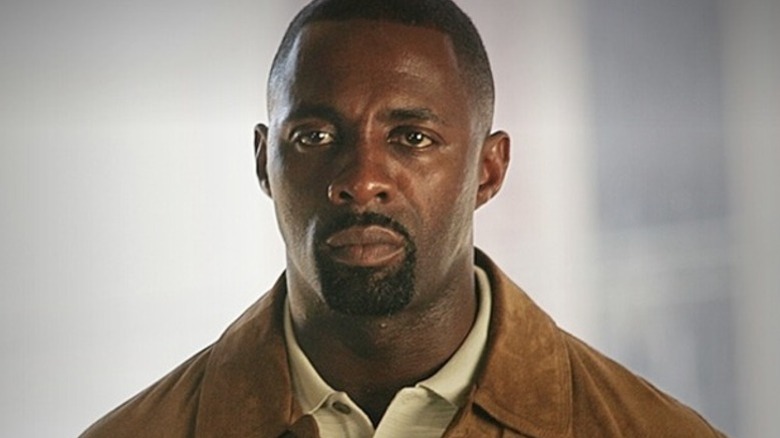
Idris Elba's outburst may or may not have caught David Simon by surprise, but the series creator was well aware that the popular Stringer Bell's death would make waves. He has said he simply couldn't see any way around the decision, because Bell's reconciliatory arc and similar views with Police Major Howard "Bunny" Colvin (Robert Wisdom) required the character's story to end.
"Stringer and Colvin are both from different sides trying to reform the drug war, and it's unreformable," Simon explained the decision to THR. "It belongs to the gangsters and to the career cops who want to get paid, and so Colvin and Stringer needed to have the same arc, thematically, to make the political point. And at a point at which you let a character or charisma or any of that stuff dictate the story you're telling, you're kind of becoming a hack."