

The 15 Best TV Shows Of The 1960s, Ranked
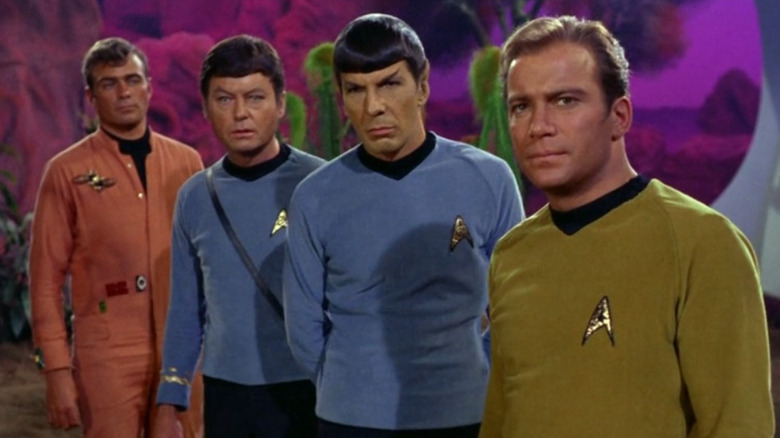
The 1960s saw a worldwide cultural revolution on multiple fronts, including film, fashion, and music. This, of course, extended to the television medium, which saw its own groundbreaking upheaval throughout the decade. Though network content restrictions remained firmly in place compared to TV programming today, popular shows advanced what could be aired publicly. Meanwhile, creative talent began to use the medium in more technologically and stylishly experimental ways compared to more straight-laced shows from the '50s.
The '60s were an exciting decade for TV and its all-around evolution across a variety of genres. Not only was the industry led by trailblazing projects, in terms of representation and the types of stories told, but many shows still hold up decades later. With that in mind, we've compiled and ranked the below '60s shows that not only pushed boundaries, but are still accessible and enjoyable today.
15. The Munsters
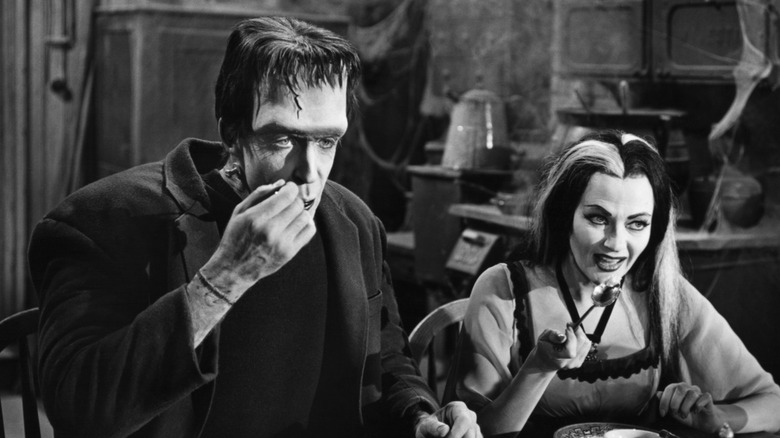
In the mid '60s, sitcoms took on a playfully macabre turn, with both "The Munsters" and "The Addams Family" airing concurrently. The former premiered in 1964, with the show following a titular and slightly monstrous family living in a sleepy American suburb. The family is headed by Herman Munster (Fred Gwynne), a Frankenstein monster married to the vampire Lily (Yvonne De Carlo). Despite their ghoulish home and interests, the Munsters are broadly a typical American family, raising their son while Herman works regularly to support the others.
"The Munsters" just edges out "The Addams Family" as the better of the two unabashedly kooky '60s sitcoms. That distinction comes from a solid ensemble cast, with the interplay between Gwynne, De Carlo, and Al Lewis, playing Lily's vampiric father, forming much of the show's comedy. Though the original series only ran for two seasons, it was popular enough to warrant a spin-off movie with 1966's "Munster, Go Home!" and other attempted revivals. This includes a Rob Zombie-directed "Munsters" movie prequel, but there's no beating the original show's charm.
14. Mission: Impossible (1966)
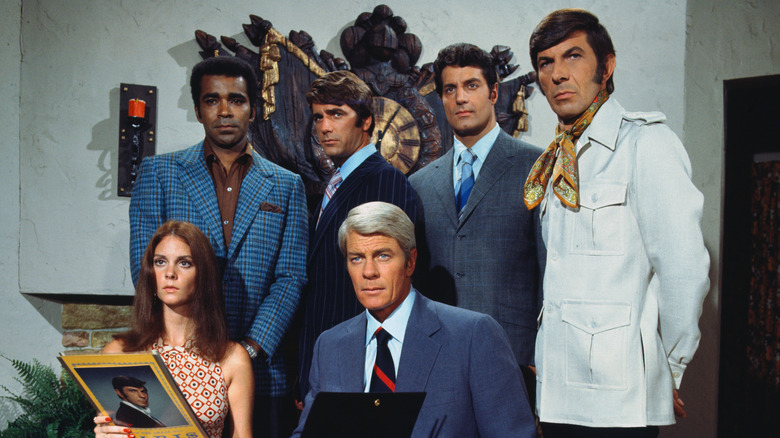
Espionage shows like "The Man from U.N.C.L.E." and "I Spy" cropped up throughout the '60s in the wake of James Bond's success on the silver screen. One enduring standout was 1966's "Mission: Impossible," which took on a more decidedly ensemble approach rather than focus on a singular secret agent. The show followed the exploits of a clandestine agency known as the Impossible Missions Force, with a team leader organizing a group of experts to carry out secret missions worldwide. For the majority of the original series, the team is led by Jim Phelps (Peter Graves), with a rotating roster of specialists to help him.
Modern audiences may forget that the "Mission: Impossible" movies are based on a TV show, but it's easy to see why the series provided solid cinematic inspiration. The self-contained nature of most episodes and meticulously scripted stories covering a briefing, planning, and execution, made for a consistently entertaining watch. The rotating nature of the main cast also helped keep the proceedings interesting, with actors like Martin Landau and Leonard Nimoy always captivating to watch in action. While following a relatively standard episodic formula, "Mission: Impossible" never felt like it was spinning its wheels, which may have been the IMF's most impressive feat of all.
13. The Outer Limits (1963)
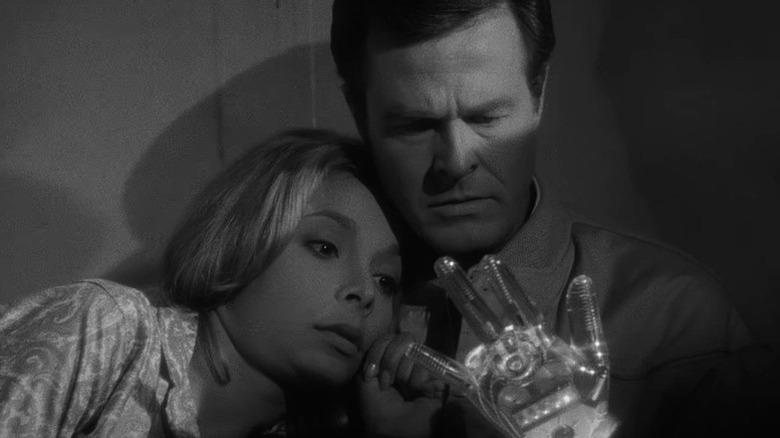
As "The Twilight Zone" began to wind down its original run, the similarly toned anthology series "The Outer Limits" premiered in 1963. Created by Leslie Stevens, "The Outer Limits" also featured standalone episodes, often with darker themes and narrative implications. What set Stevens' show apart is that the series veered more often and explicitly into the realm of science fiction, usually with extraterrestrials or weird science gone wrong. This often led to tales full of harrowing conflict, ranging from the terrifyingly intimate to apocalyptic in scope.
While comparisons to "The Twilight Zone" will continue until the end of time, "The Outer Limits" relied more on action and thrills than twist endings and sentimentality. Still, Stevens' series did bring an edgier sensibility to it than many shows of its era which, along with the anthology format, offered the tonal similarities. To its credit, "The Outer Limits" wasn't afraid to get weirder and more violent than Rod Serling's creation, helping set it apart all the more. That said, as far as shows like "The Twilight Zone" you need to watch next, "The Outer Limits" is as close as it gets.
12. Dark Shadows (1966)
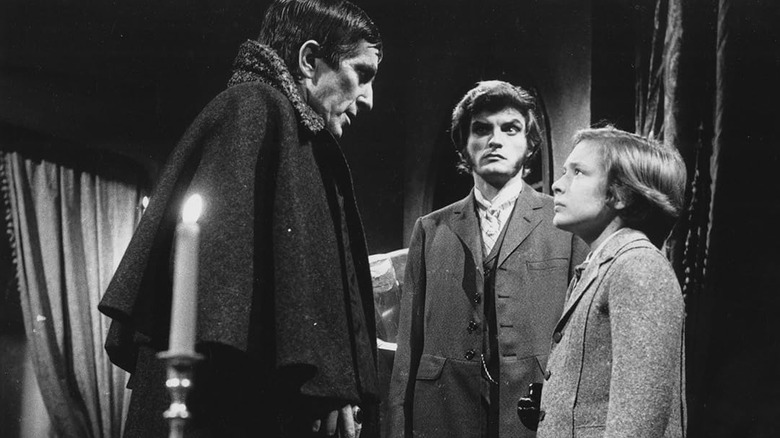
One daytime soap opera that completely defied typical genre conventions was "Dark Shadows," which ran from 1966 to 1971. The show followed governess Victoria Winters (Alexandra Moltke) as she arrived to work at the coastal Maine estate of Collinwood. After several supernatural incidents, the Collins family was forever changed when their vampiric ancestor Barnabas Collins (Jonathan Frid) was freed from his tomb. This spurred the arrival of other paranormal figures around the estate while the history of Collinwood was explored through various time travel adventures.
Just based on that preceding paragraph alone, you get merely a fraction of an idea about how absolutely bonkers the original "Dark Shadows" was. And yet, for all the werewolves, parallel universes, and unspeakable horrors, the overarching narrative somehow managed to cohesively work together. Since the show's conclusion, there have been multiple attempts at revivals, including a "Dark Shadows" sequel series at The CW. But there's just something about the horror-tinged lightning in a bottle that the '60s show captured that's been impossible to fully replicate anywhere else.
11. I Dream of Jeannie
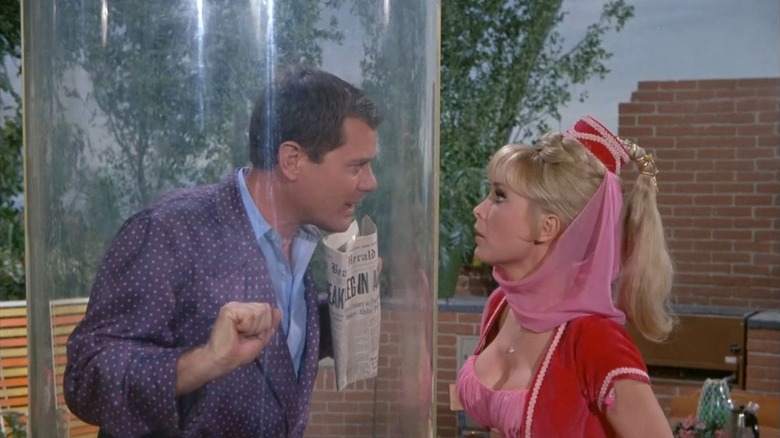
Before the late Larry Hagman's iconic role on "Dallas," he starred in the fantasy sitcom "I Dream of Jeannie." Hagman played astronaut Tony Nelson, who landed near a desert island where he discovered a mysterious magic lamp. Tony freed the genie trapped within, appropriately nicknamed Jeannie (Barbara Eden), who fell in love with him and helped him return home to Florida. As Tony tried to keep Jeannie's existence and true nature a secret from his friends and colleagues, a reciprocal romance formed between them.
Eden lit up every scene she was in as the cheerful Jeannie, memorably granting wishes with a smiling nod and blink. Her natural chemistry with Hagman carried much of the show, grounding the magical gags that made up the majority of the show's humor. Given Tony's profession, the series reflected the Space Race era in which it aired, a distinction prominently and organically incorporated into the story. Lightweight sitcom fun with a magical twist, "I Dream of Jeannie" is one of two fantasy sitcoms that helped define '60s television.
10. Mannix
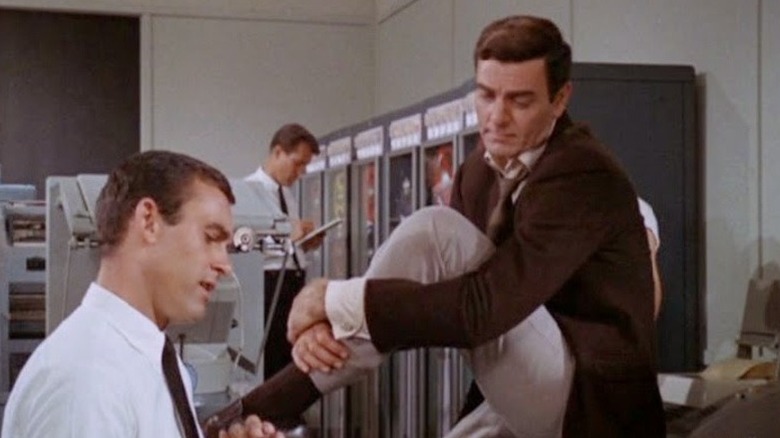
The detective series "Mannix" was developed by "Mission: Impossible" creator Bruce Geller and initially shared crypto-thriller sensibilities. The show centered on private investigator Joe Mannix (Mike Connors), who originally worked for a high-tech agency taking orders from a supercomputer. After the first season, Mannix quit this agency and became a much more conventional detective, running his own private business with his assistant Peggy Fair (Gail Fisher). In contrast to other contemporary television private detectives — like Jim Rockford, who had contentious dynamics with the police — Mannix formed a close working relationship with the LAPD.
Running for eight seasons from 1967 to 1975, "Mannix" was the definitive detective show of the late '60s into the mid '70s. Connors brought a laidback sense of cool to the titular character, often epitomized by his repartee with Fisher. At the same time, the series featured a lot of crime-fueled action, with Mannix regularly getting into fisticuffs, gunfights, and car chases. An action-heavy update of the detective genre, "Mannix" proved to be a popular draw after ditching its light sci-fi direction in its first season.
9. Doctor Who
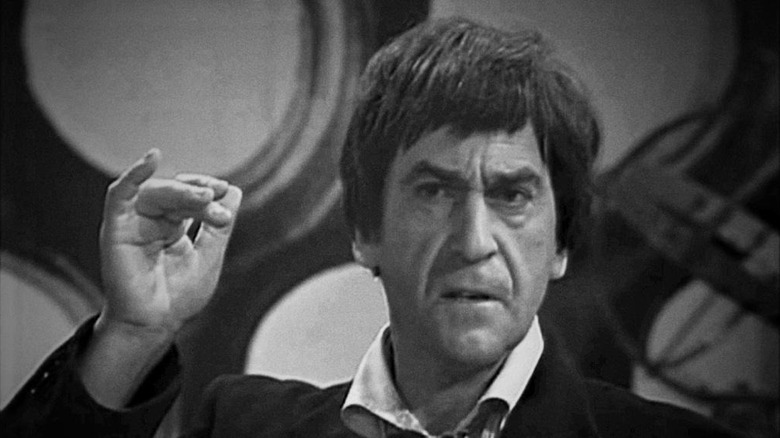
With occasional breaks, "Doctor Who" has been a staple on British television since its premiere in 1963. The show follows a nameless alien visitor, known simply as the Doctor, who travels through space and time through the TARDIS, a cosmic vessel disguised as a British police callbox. The Doctor is often accompanied by human companions as he explores bizarre incidents in his travels, often pitting him against memorable extraterrestrial enemies like the Daleks and Cybermen. Whenever the Doctor suffers mortal injuries, his body regenerates into a new physical form, facilitating a recast of the show's lead actor.
Through sheer longevity and its longstanding cultural relevance, "Doctor Who" has become a generational franchise, akin to something like "Star Trek." Though many would argue the show truly found its creative voice in the '70s, the '60s proved instrumental in establishing the show's wacky foundations. The series' second Doctor, played by Patrick Troughton, really captured the childish eccentricities of the Doctor's personality, juxtaposed with episodic sci-fi menace and wonder. More than 60 years after its debut, "Doctor Who" still offers surprising twists, keeping both longtime and new fans riveted as they wait to see where this time-bending story goes next.
8. Batman
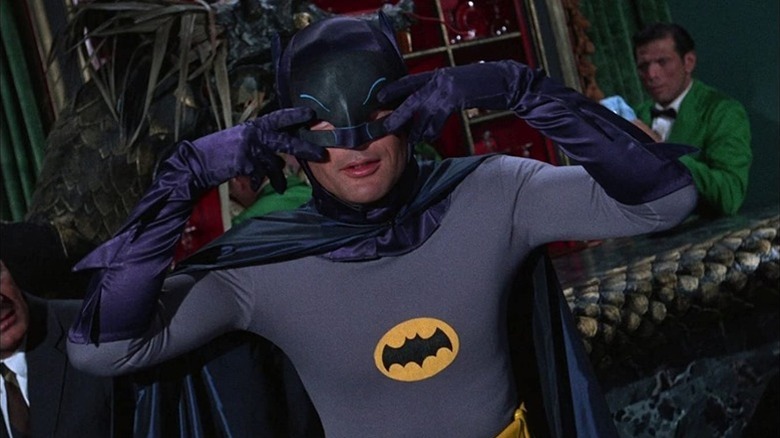
The show that defined a franchise in much of the public consciousness for a generation, 1966's "Batman" colorfully brought DC's superhero to life. The action show starred Adam West and Burt Ward as Bruce Wayne and Dick Grayson, a pair of wealthy philanthropists living in Gotham City. The dynamic duo was secretly costumed crime-fighters Batman and Robin, defending Gotham from a whole line of gimmicky supervillains. The pair worked closely with the Gotham City police and often got out of tight situations with a handy gadget in their utility belts.
Compared to grimmer depictions of DC's Dark Knight, 1966's "Batman" was a breezy and fun take on the character. So much of that buoyant entertainment came from its colorful pop art design, spirited fight scenes, and the interplay between Ward and the late West. Joining them was a whole line of equally wacky guest stars, from Frank Gorshin's Riddler and Julie Newmar's Catwoman to Vincent Price's Egghead. A swashbuckling theater of the absurd, "Batman" reflected the over-the-top nature of the character's Silver Age adventures, realized in glorious color television.
7. The Andy Griffith Show
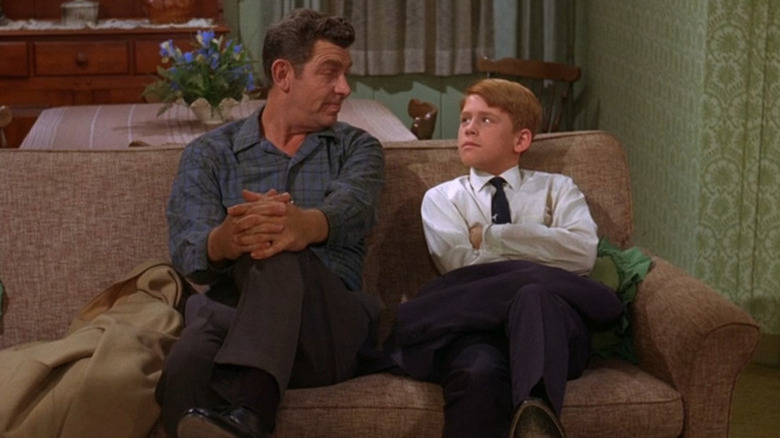
There are few shows as enduringly wholesome as "The Andy Griffith Show," starring Andy Griffith as widowed single father Andy Taylor. The sheriff of the small North Carolina town of Mayberry, Andy raises his young son Opie (Ron Howard) with his Aunt Bee (Frances Bavier). Joining Andy on the force is his deputy and bumbling best friend Barney Fife (Don Knotts). The main characters are joined by a wider recurring ensemble cast, including service station attendant Gomer Pyle (Jim Nabors) and town barber Floyd Lawson (Howard McNear).
So much of the charm in "The Andy Griffith Show" lies in its easygoing rustic storytelling and amiable ensemble cast. The narrative stakes are usually relatively low and the series often focuses on low-intensity slice-of-life stories. Given the show's long run and the recurring nature of its supporting characters, there was a real sense of ongoing community that connected with audiences. After Griffith left, the TV show changed its title to "Mayberry R.F.D." but remained a popular draw, proving the appeal of its wider ensemble.
6. Bewitched
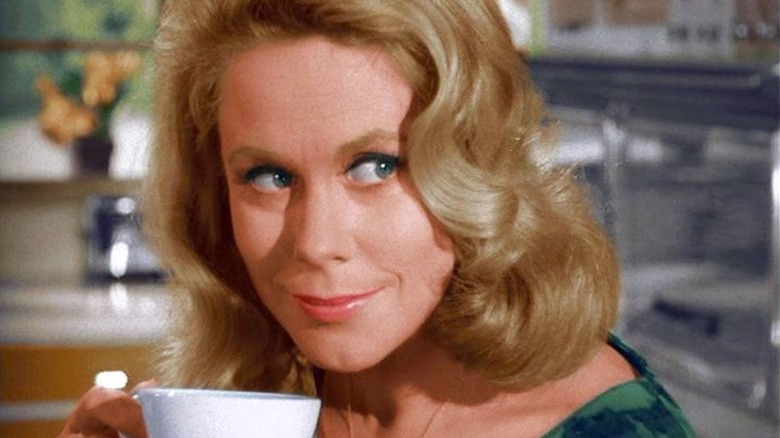
Before "I Dream of Jeannie," there was "Bewitched," which premiered the preceding year in 1964. The series revolved around a married couple, witch Samantha (Elizabeth Montgomery) and her mortal husband Darrin Stephens, who discovered his wife's true nature after their relationship began. Samantha's magical family disapproved of the mixed marriage and constantly interfered with their suburban lives, often at Darrin's expense. While Samantha maintained the guise of being a typical housewife, she discreetly used her magic to resolve issues, subtly casting spells with a twitch of her nose.
While "Bewitched" initially starred Dick York as Darrin, the show changed actors midstream due to York's health, replacing him with Dick Sargent. Even with the prominent recasting, "Bewitched" ran for an additional three seasons, for an eight-season total, dominating airwaves for most of the '60s. Montgomery was an absolute powerhouse in the show's starring role, maintaining her chemistry with Sargent, and the magical hijinks her family got into stayed fresh. A smartly written sitcom that took the genre further away from its white picket fence contemporaries, "Bewitched" provided plenty of fantastical fun.
5. The Avengers
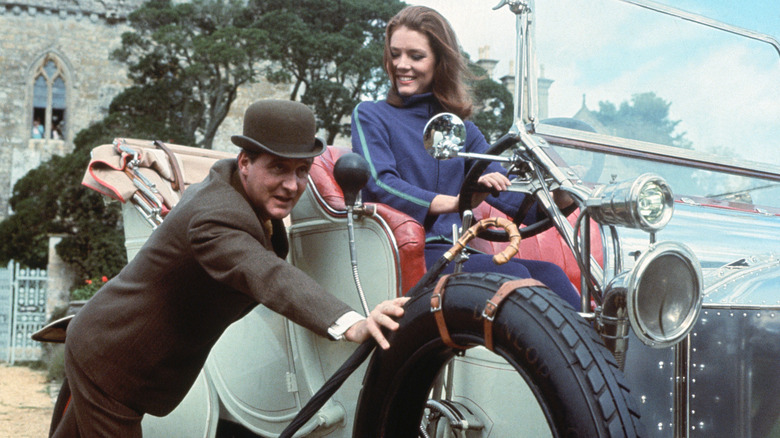
Of course, America wasn't the only country producing spy shows in the '60s, with British television getting in on the espionage craze. The most slickly stylish and supremely cool British spy series of the era was "The Avengers" (no, not those Avengers). The show followed well-tailored English gentleman John Steed (Patrick Macnee) as he took on criminals, terrorists, and hostile foreign entities in defense of Britain. Steed was joined by a line of espionage experts, including Cathy Gale (Honor Blackman) and Emma Peel (Diana Rigg).
Premiering in 1961, "The Avengers" actually predated the first Bond movie but leaned more into those mod aesthetics as the Bond films took off. This included a striking art design and downright iconic fashion sense for Steed's companions. Beyond its groovy presentation, the series was propelled by Macnee's natural chemistry with his co-stars, particularly Rigg. A clear standout from the parade of '60s spy shows, "The Avengers" was in a league of its own.
4. The Wild Wild West
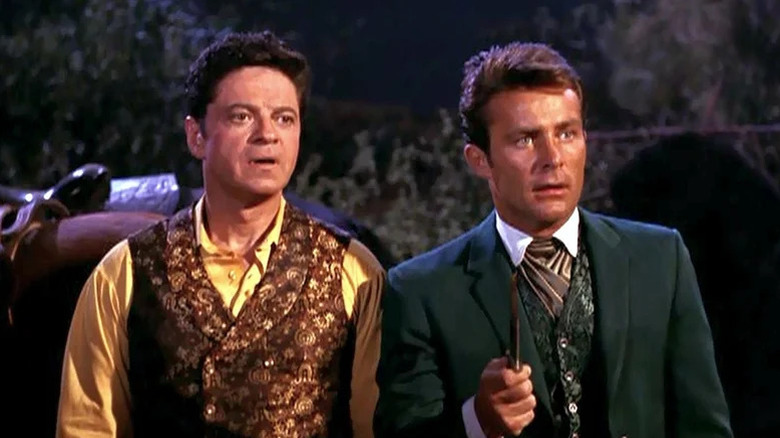
Western shows were still very much in vogue throughout the '60s, but 1965's "The Wild Wild West" combined the genre with the growing spy craze. Set during the presidential administration of Ulysses S. Grant in the 19th century, the show followed U.S. Secret Service agents Jim West (Robert Conrad) and Artemus Gordon (Ross Martin). Traveling the frontier in a gadget-laden railroad car, the duo took on sinister threats to national security. West was a more action-oriented figure, often handling each episode's gunfights and brawls, while Gordon employed advanced gadgets and disguises to get the job done.
Forget that it spawned one of the worst movies based on a TV show — the Will Smith-Kevin Kline feature film released in 1999 — because "The Wild Wild West" deserves a far better legacy. The show had a comic book flair for action, underscored by its similarly styled opening title sequence, while maintaining Wild West aesthetics. The series was also one of the first major television shows to use prominent steampunk elements, often seen in the contraptions that Gordon and several supervillains utilized. The most unabashedly entertaining Western series from the '60s, "The Wild Wild West" is perfect for anyone who thinks "Gunsmoke" or "Bonanza" is too tame.
3. The Prisoner (1967)
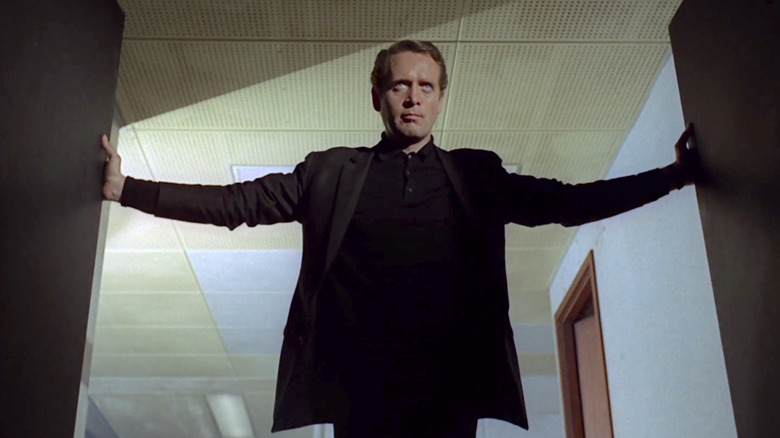
With the entertainment industry flooded by spy stories by 1967, the British series "The Prisoner" took the genre into a stunningly original direction. Patrick McGoohan starred as an unnamed British spy referred to as Number Six, an operative who was incapacitated when he attempted to resign from his clandestine position. Upon regaining his senses, Number Six found himself living in a remote and closed-off small town known simply as the Village. As he attempted to escape, he contended with a rotating community administrator, each bearing the moniker Number Two, who tried to coerce him into revealing why he resigned.
"The Prisoner" was one of the most unique shows from the '60s, with its unsettling presentation and vaguely menacing implications. All at once, the show was a subversive spy series, a psychological thriller, and a light sci-fi tale emphasizing individuality and freedom over collectivist conformity and compliance. The series received an American remake on AMC in 2009, which is frankly to be avoided at all costs. Instead, just revisit the original classic and its surreal deconstruction of the espionage genre.
2. Star Trek
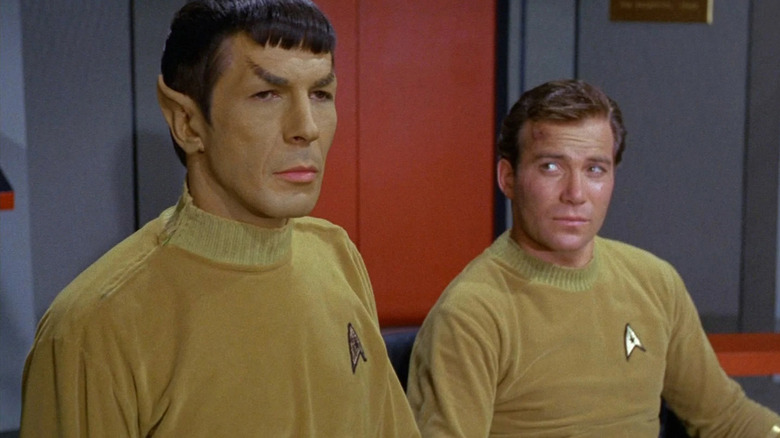
Retroactively dubbed "Star Trek: The Original Series," 1966's "Star Trek" is the series that still serves as a clear foundation for a science fiction phenomenon. Created by Gene Roddenberry, the show is set in the 23rd century, with humanity having developed faster-than-light space travel and begun expanding across the cosmos. The story centers on the USS Enterprise, a starship captained by Jim Kirk (William Shatner) on an exploratory mission on behalf of the United Federation of Planets. Kirk and his crew witness the wonders of the unknown, sometimes incredibly dangerous and sometimes awe-inspiring, as they venture throughout the galaxy.
An absolute classic of the genre, plenty of the original show's most memorable moments have cemented themselves into television history. And while its extensive influence on pop culture and technology can't be understated, it also holds up as an enduringly effective series in its own right. With the show's episodic nature, stories can range from overtly comedic tales to deeply personal tragedies inflicted on the Enterprise crew. A thought-provoking series that quietly broke new ground for television and sci-fi, "Star Trek" is a clear vanguard of its genre.
1. The Twilight Zone (1959)
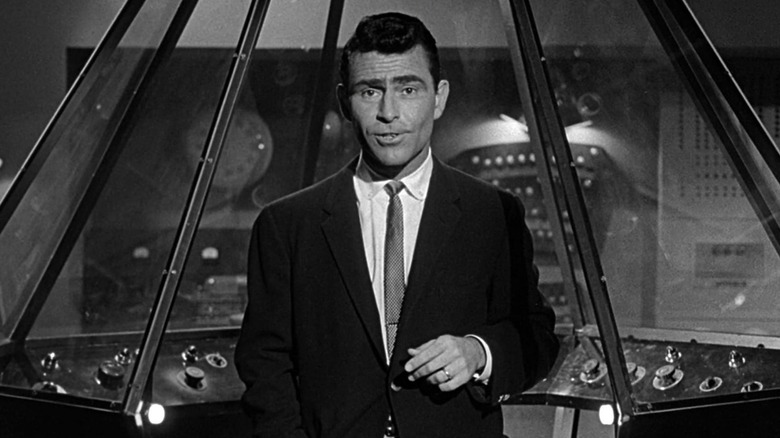
Yes, "The Twilight Zone" premiered in 1959, but the majority of its run was during the '60s. Created by Rod Serling, the series was an anthology show with each episode featuring a standalone story exploring fantasy and science fiction. With the heightened creative possibilities of these genres, episodes often explored fantastical tales about the human condition. And on many occasions, episodes of "The Twilight Zone" concluded with a twist ending, leaving the audience thinking about the full implications of the story.
"The Twilight Zone" was absolutely revolutionary when it premiered, and it's hard to fathom that something so forward-thinking and high-concept could air alongside lightweight shows like "Leave It to Beaver." Even more than 60 years later, the series stands as one of the greatest shows ever made, regardless of its contemporary decade. And with the sheer amount of all-time standout "Twilight Zone" episodes, everyone has their own favorite moments. The series has received multiple revivals and been imitated countless times, but nothing compares to Serling's original magnum opus.